
The Problem: two companies, two technologies, one deadline
The core issue wasn’t technical in the strict sense, but the distance between two worlds.
The parent company used an external portal with a content publishing logic profoundly different from SharePoint, with pages organized by department, a news management system that felt more like a social network than a corporate portal, a level of complexity such that no one, not even those who had managed it for years, could accurately estimate how much content it actually contained.
It remained difficult to understand how much text material, how many procedures, how many informational pages actually needed to be recovered. And the problem wasn’t just the documents, which were reasonably well mapped, but all the discursive information hidden between one link and another.
The smaller company, the one that already had a working intranet.ai portal, was in a different position, because it knew exactly how its content was structured, having built it together with our team. But this very imbalance made the merger work even more delicate.
Everyone had to be brought to the same level, without either group feeling they had lost something along the way.
On top of all this, a non-negotiable deadline. Go live was set just over a month after the project kickoff.
This meant drastically compressing the analysis phase too, which normally takes weeks. In just four days the team had to find its way around a portal it had never seen before, work out what to keep, what to let go, and how to translate everything into a new structure. In the end, the project nearly tripled compared to the initial estimates: from roughly 30-45 pages planned to 59 pages actually delivered, all completed within a single month.
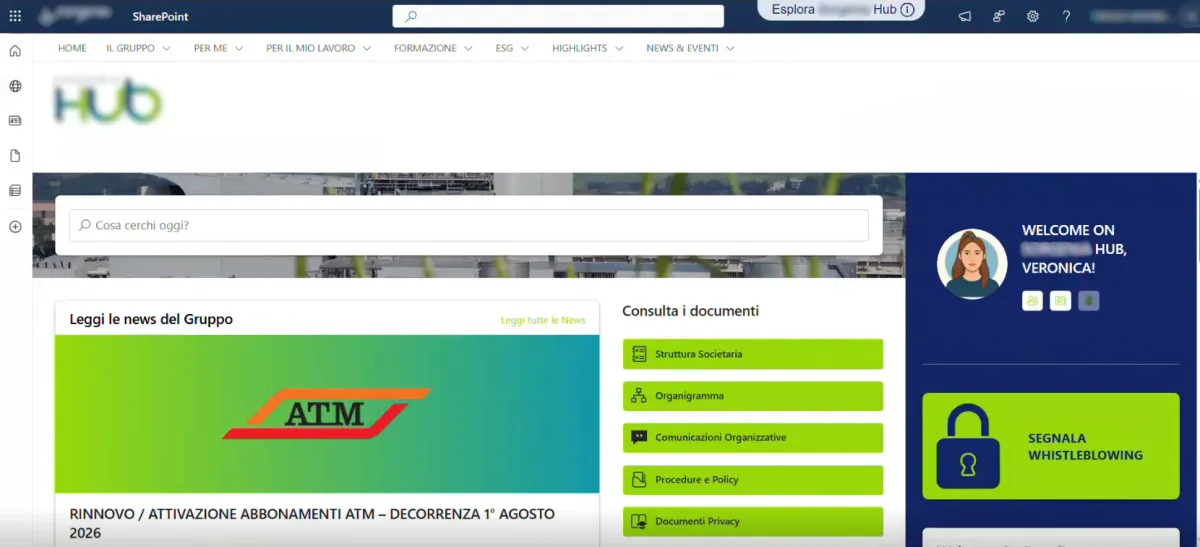
Home page of the energy group's intranet
Our Solution: an architecture designed to grow with the company
The first strategic decision was not to design for the present, but for the future.
Knowing the group would keep growing through acquisitions, the new intranet’s architecture was designed from the outset to be able to expand without having to be rethought from scratch each time.
At the center was placed a hub site, the starting point from which all users, regardless of which company they belong to, reach the information they need. Around this core, two document subsites were built, one meant to gather the archives of the company that joined the group and the other designed for the more operational and maintenance side, plus a vertical site entirely dedicated to human resources, rich enough to function almost like a second intranet within the intranet. A fourth site, reserved for compliance, was built and populated in its document structure, ready to be activated at a later stage as soon as the group decides to open it up to users. A sort of cathedral under construction, where each new wing is added without having to rethink the foundations.
For the human resources area, the goal was for users to never feel like they were leaving the main intranet.
Pages were therefore created and treated like true internal home pages, rich with buttons, information boxes and calls to action designed to guide anyone looking for information on agreements, the collective agreement, welfare or benefits, without having to guess where to click. At the bottom of every page a small banner with a direct contact for support was added, a detail that proved particularly effective: the HR team confirmed that since the new structure went live, requests are finally reaching the right addresses, a sign that users are finding what they’re looking for without having to search for it twice.
The quietest but heaviest work was on the news.
Migrating communications from a system that published content like social posts, often without consistent images, to an ordered structure linked to reference documents required painstaking manual matching, item by item, even preserving the backdating of publications to keep the original chronological order.
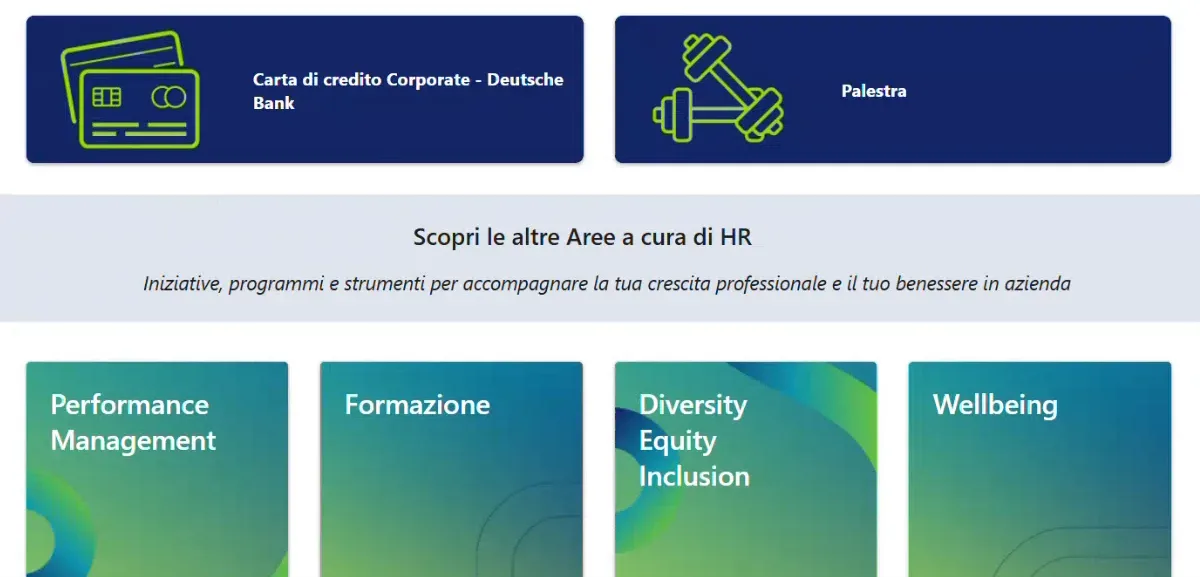
HR area in the SharePoint intranet
The Results: one month later, the platform most used by the company
Just a few weeks after launch, the numbers tell a story of adoption that goes well beyond the expectations for a project launched under such compressed conditions.
In just one month since launch, the platform recorded over 41,000 total accesses, with daily peaks that, in the days following go live, reached 2,000-3,000 visits per day.
Each user, on average, spends around 30 minutes a day on the intranet, a level of engagement that points to use that’s woven into the daily work routine rather than occasional, helped by the fact that many colleagues have set the intranet as their browser’s home page.
The vertical site dedicated to human resources alone surpassed 533 active people in a month, a significant number considering it’s an area meant to answer specific needs rather than general daily browsing.
Even editors, ordinary users without administrative permissions, felt comfortable publishing new content from the very first days, without reporting any difficulties. This is an important indicator of just how intuitive the logical structure built together with the client really was, and not merely how good it looked.
The most meaningful feedback, though, came from people.
The project received full appreciation both at the top of the organization, where the CEO saw the platform a few days before launch and immediately started imagining future developments, and from the internal communications team, who received a company award dedicated to productivity for this work. A project born under pressure turned into a small source of internal pride.
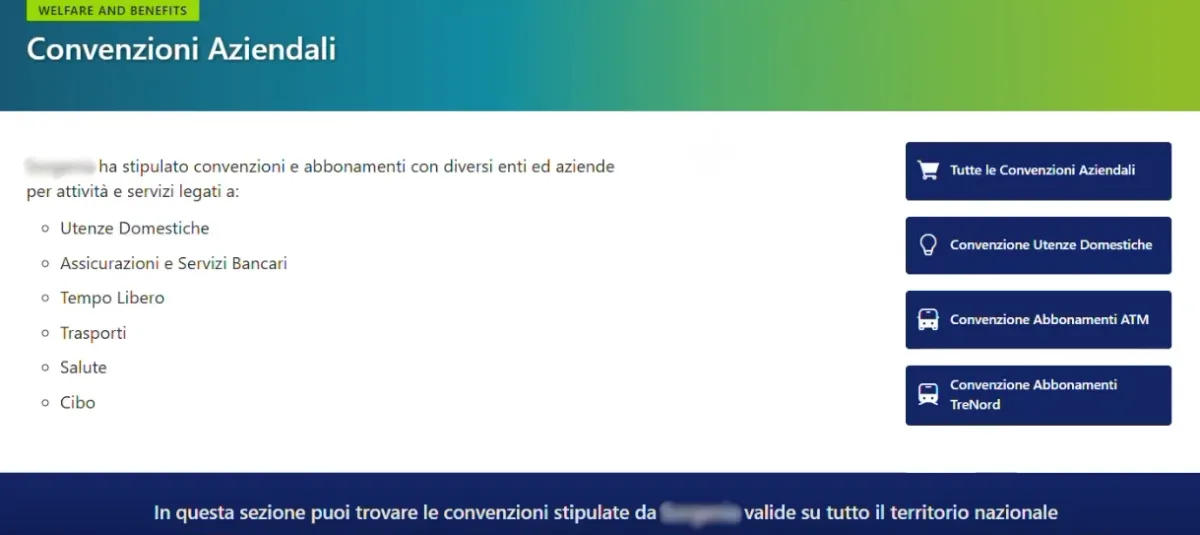
Welfare area in the SharePoint intranet
What’s Next?
The journey is designed to unfold in three phases, and the first, the one just described, is only the beginning.
The second phase will move forward with enriching the content, starting with the introduction of departmental features.
The third phase will instead be dedicated to engagement, an area the client has already expressed interest in exploring further. It’s no coincidence that during the preliminary focus groups, users also asked loudly for an intelligent search tool, as well as a mobile app designed for people who work directly on-site and spend their day away from a desk.
The goal is for the platform to keep growing together with the organization, as new companies join the group, for an intranet designed as living infrastructure.
Even when time is extremely tight, an architecture designed for the future allows an intranet to grow together with the company that uses it, without having to start from scratch at every new challenge.
Is your company going through a merger or reorganization and do you need to unify your digital platforms? Book a demo and find out how intranet.ai can support your organization’s growth.