The Problem: Scattered Information, No Common Reference Point
The main reason that led the company to contact intranet.ai was too much confusion when trying to find information.
The various business functions, including IT, HR and quality, each worked according to their own logic, often without a shared channel to bring content together into a single space accessible to everyone. The objective stated by the client was clear from the first meeting: break down this division by department and consolidate everything onto a single platform, while keeping, where the volume of content required it, more structured vertical sites for the departments that truly needed them.
Since this was the company’s first intranet, the people who would have to feed the platform with content had never managed a similar tool before. Translating everyday working life into organised digital content is not straightforward when you have never done it.
The client also needed certain particularly sensitive documents, including policies, HR data and quality documents, to be non-downloadable by users, even those with viewing permissions.
Removing the download icon from a web part is not enough, because SharePoint still keeps a native download button when the document is opened. The solution required building a vertical site with reinforced permissions, capable of genuinely blocking downloads, involving the client’s internal infrastructure security teams as well.
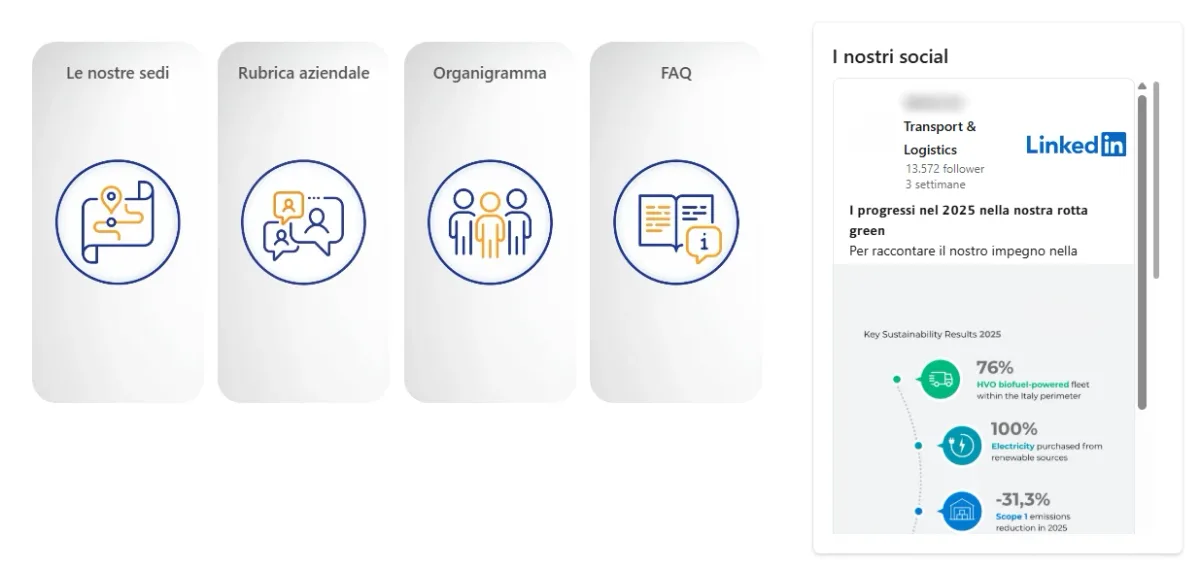
Sections of the company intranet
Our Solution: A Solid Foundation, Built to Grow
The answer to this centralisation need was the creation of a main hub site, designed to bring together all communications and resources regardless of the department they came from.
Departments with a higher volume of content and more people involved in managing it, such as IT, HR and quality, received dedicated vertical sites, but everything published on those sites is automatically inherited and shown on the home page as well, so no content stays isolated in a corner of the intranet reachable only by those who already know where to look.
For documents requiring stricter protection than simple access control, a dedicated vertical site was built with independent permissions from those inherited from the rest of the platform. This created a kind of controlled-view area, where categories such as HR policies, protection data, quality documentation and the org chart are visible but not downloadable, without being able to bypass the settings of the individual web part.
On the engagement side, the project had to strike a balance between two opposing pushes. On one hand the company wanted to strengthen its sense of belonging, for example with a dedicated widget for new hires on the home page, on the other, a rather cautious internal sensitivity around privacy guided different choices from those originally planned.
So the digital engagement board was given a content approval system, to avoid uncontrolled publications by users, and even the surveys, despite being anonymous by design, generated some internal hesitation, a sign of an organisation that, while young and dynamic in spirit, still keeps a cautious approach to anything involving colleagues’ data and personal information.
A further distinctive element of the project concerns language. As a company with offices in several European countries, the site was configured with English as the base language, a necessary technical choice since the main language of a SharePoint site cannot be changed once the site has been created.
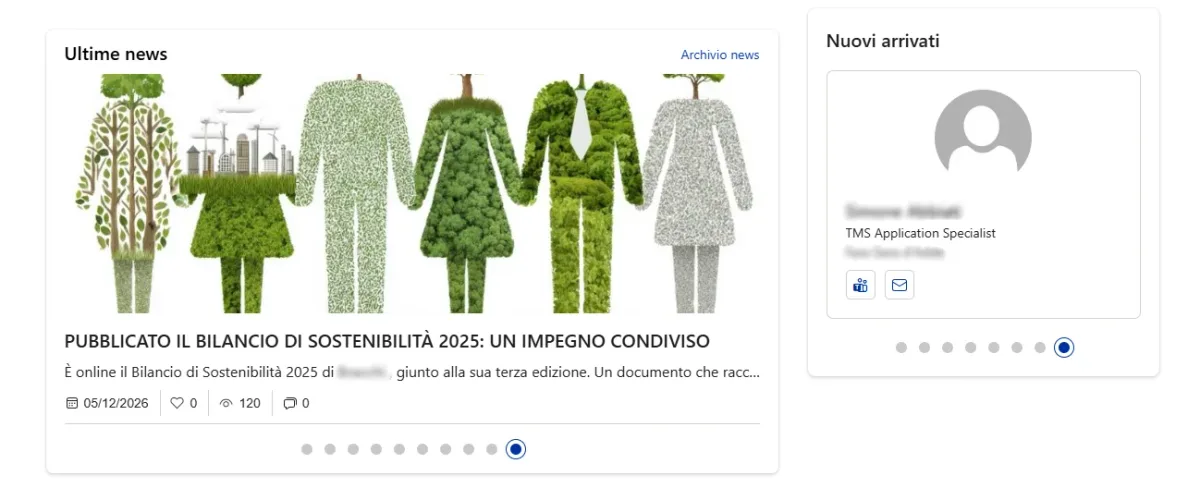
News and New Hires in the intranet.ai intranet
The Results: A Solid Foundation, Ready to Grow
The project went live about two months after kickoff.
It was not a linear path, but the end result is a solid platform that covers all the basic needs for a company that had never had a similar tool before, with documents organised by category, operational applications, a unified flow of company communications, and the first engagement elements for colleagues.
Editors, even without advanced technical skills, quickly found their way around content publishing, and the operational buttons on the home page, such as quick access to the org chart, were among the most appreciated features.
Even months after launch, the client got back in touch with the team with a support request, a sign that the platform remains an active point of reference.
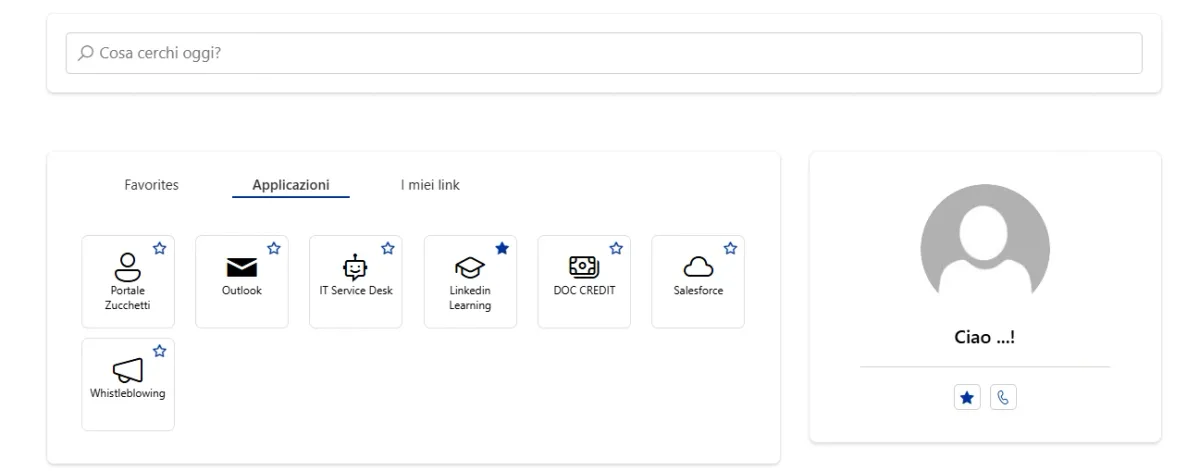
intranet.ai features in the company intranet
What’s Next?
The multilingual project remains the most natural next step, to offer each office an intranet in its own country’s language.
The team is ready to support the company through this evolution, as well as any further development of the engagement components, an area that, given the many initiatives the company already runs to engage colleagues outside of work, still has ample room to grow within the platform itself.
Even a first intranet can become a solid foundation on which to grow a company’s internal communications over time, as long as the structure is designed from the start to support that growth.
Are you about to build your company’s first intranet and want to start on solid ground? Book a demo and find out how intranet.ai can support you from day one.