
The Problem: Communication Still on Paper, and Three Companies to Unite
The group comprises three distinct companies, each with its own departments and responsibilities. The HR function, for example, formally reports to only one of the three. Before this project there was no shared tool capable of making people feel part of a single reality, beyond their administrative membership in the group.
Adding to the complexity, the internal kickoff phase was not immediate. Various departments, from HR to marketing to communications, had each started thinking about their own needs separately, without a shared vision. The project really gained speed only once the teams began coordinating their work more decisively.
From that point, the need to go live quickly became urgent: the final configurations were completed within a few days, to meet a launch timeline decided at short notice.
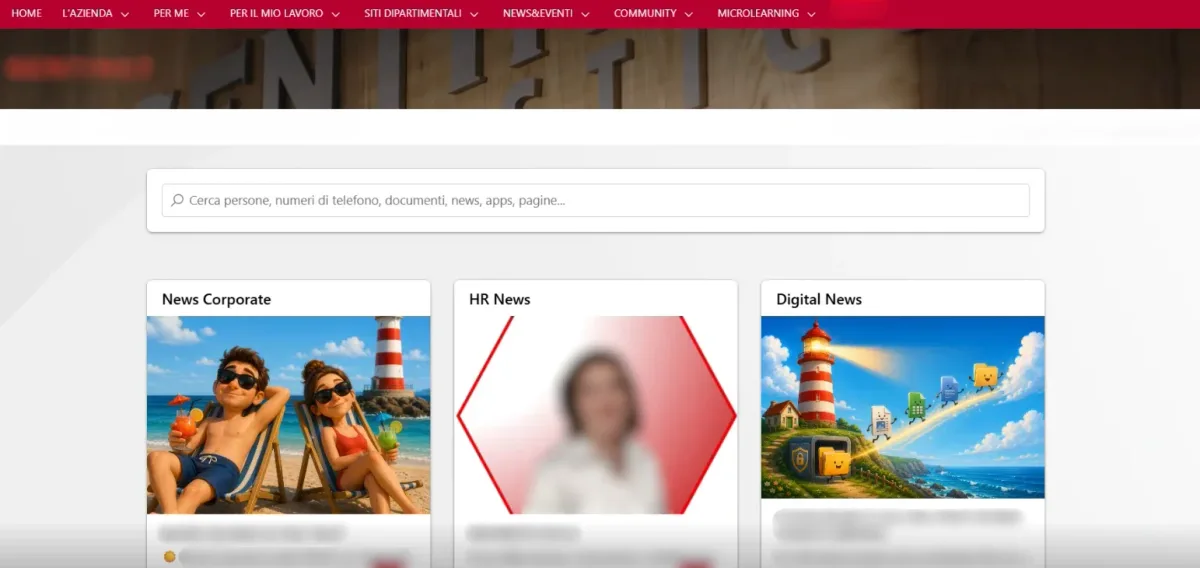
Home page of a medical group's company intranet
Our Solution: An Editorial Plan to Grow One Step at a Time
The underlying architectural choice was to build a single hub, shared across the group’s three companies, rather than separate sites for each of them.
Very little content remains restricted to a single company, such as some benefits information visible only to the largest company in the group. Otherwise, all departmental sites are visible and accessible to anyone in the group, a detail that concretely reinforces the sense of belonging to a single organisation.
Rather than activating the entire catalogue of components available under the client’s chosen plan straight away, we agreed with the team to proceed with a genuine editorial plan: introducing tools progressively over the course of the year, so people could discover the intranet one step at a time instead of being faced with everything at once from day one.
The first features activated were search and digital sign-off for documents, the most urgent for the organisation. From there, the plan calls for the progressive introduction of analytics and booking tools, as the internal team becomes more familiar with the platform.
A separate chapter concerns training. The Microlearning365 platform was activated, the LMS tool created by the intranet.ai team. Connected to the intranet and seamlessly navigable, the course catalogue, among the most visited content on the platform, is currently focused on digital skills, with courses dedicated to Copilot, artificial intelligence and prompting.
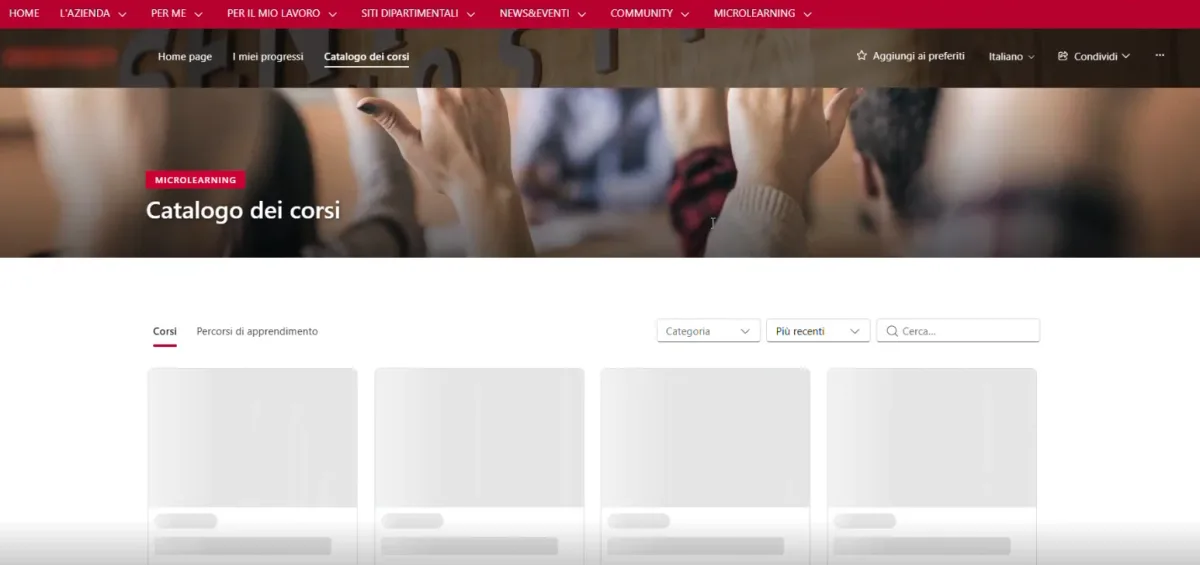
Microlearning course catalogue in the company intranet
The home page was built with a strong focus on communication, with a carousel featuring the most important news, sections dedicated to corporate, HR and ICT communications, a space dedicated to the stories of people joining the company, and even a section celebrating company achievements and related awards.
An interesting detail also concerns language. The intranet was initially set up in English, but listening to the team’s real needs, given that very few people speak English, it was fully translated into Italian before launch, a concrete example of adapting to the client’s actual needs compared with the initial assumptions.
Aware that part of the workforce operates on the production floor and does not have daily access to a computer, the group chose to keep the paper newsletter running alongside the intranet, a multichannel approach designed to leave no one out.
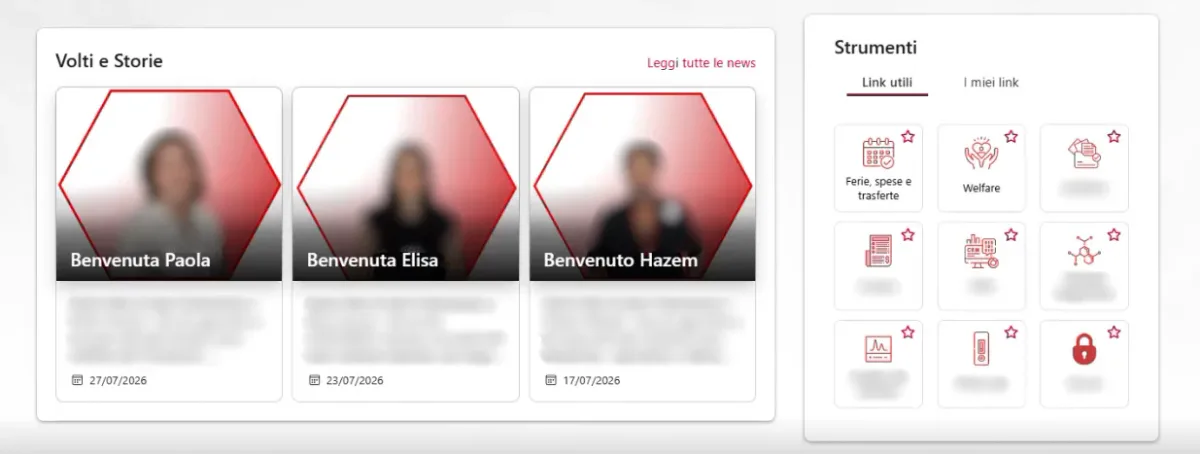
News about new hires in the intranet
The Results: A Hub Already in Use, With Room to Grow
About 300 people have access to the platform. Over 30 days, the hub records on average between 1,000 and 2,000 visits a day, with around 200 to 220 unique visitors daily: considering the total population, that means roughly two out of three users access the intranet every day.
Microlearning also shows encouraging signals, with usage already involving about half of the people in the group. The home page and course catalogue remain the most visited pages, while the news archive gets less traffic, probably because the most important news is already clearly visible directly on the home page, a sign that the structure chosen for the main page works as intended.
What’s Next?
The editorial plan will continue in the coming months with the gradual introduction of the other tools already available in the client’s plan, including advanced analytics and booking tools.
Also under consideration is the introduction of customised artificial intelligence agents, designed to autonomously gather news and updates relevant to the diagnostics sector, a topic the group is following with particular interest.
A page dedicated to internal surveys and feedback is also ready, as is a space designed as a noticeboard for exchanges between colleagues, both already built and waiting for the right moment to launch. The work continues to be a close collaboration with the client’s team, with new content and pages added almost every week.
When an organisation starts almost from scratch, an editorial plan paced over time lets people discover the tools available one step at a time.
Are you about to build your company’s first modern intranet and want a gradual adoption path? Book a demo and find out how intranet.ai can support you step by step.