The Problem: manual processes and countries running at different speeds
Before digitalisation, many internal processes ran through fragmented channels.
A request such as paternity leave required downloading a form, filling it in, re-uploading it and relying on manual steps to reach the right person in HR. Document sharing with suppliers around the world, covering raw materials, products and packaging, also relied on shared folders scattered across personal accounts, with all the limits of that kind of management.
There was also a natural imbalance between countries.
Italy, where the head office is based, had developed a content-rich intranet visited daily, while the other countries, with smaller teams and fewer people to engage, covered only the essentials. One part of the platform therefore stayed far more active and current than the others, simply because of the different scale of the local structures.
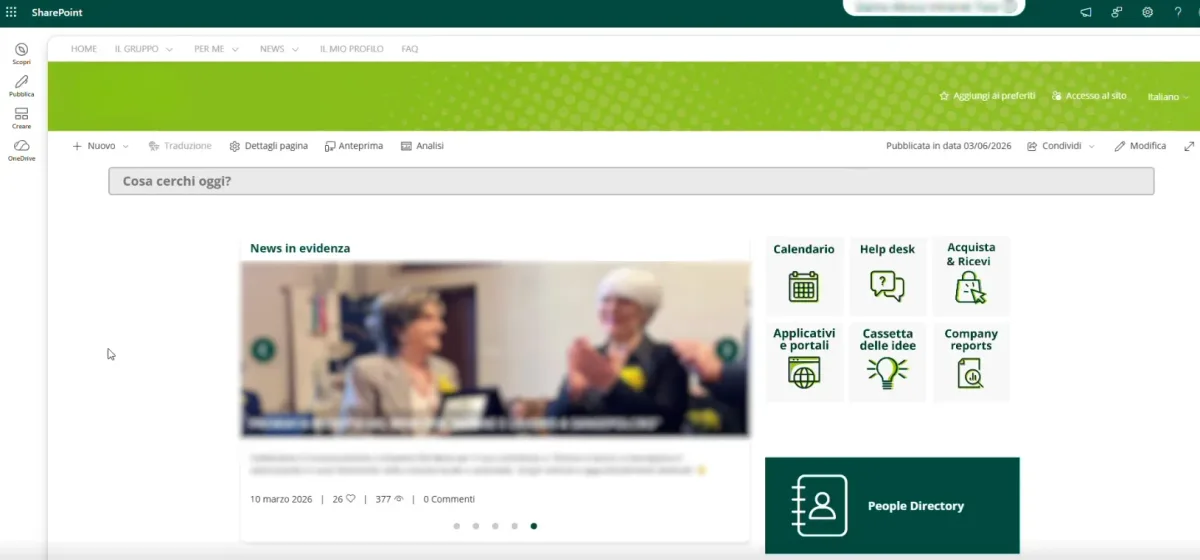
Company intranet home page
Our Solution: digitalise everything, and play when it makes sense
The first area of work was digitalising document-based processes. Company forms, from leave requests to internal procedures, were converted into fillable templates accessible directly on the intranet, with a system that automatically recognises which department the request is coming from and routes it to the correct HR contact, complete with a legally recognised digital signature.
A similar approach was scaled up with a dedicated supplier portal, separate from the intranet but built on the same logic: cross-cutting content valid for all managed countries, alongside dedicated spaces where each supplier can independently upload their own information.
The most original element of the project, however, came about almost by accident when the company asked for a tool to invite colleagues to explore the intranet in a playful way. The result was a digital treasure hunt with an Easter theme, using eggs as the starting icon.
The mechanism is as simple as it is effective: a news post announces the start of the game, and clicking on the icon opens a clue written in rhyme that leads the user to guess which page of the intranet to visit. Once they find the right page, another icon hides the next clue, until the final stop, which closes with a congratulations message. Each participant’s time is tracked, making it possible to reward whoever completes the route fastest. The first edition rewarded the top three finishers with a giant Easter egg, announced in a dedicated news post.
The initiative can be adapted for any client who wants to bring some play into their intranet, with different icons depending on the chosen theme, from a treasure chest to other variations. Experience has shown that the ideal number of clues is around ten, the point where the game stays engaging without tiring participants.
Another interesting initiative developed together with this client was a digital idea board, which generated proposals that were genuinely implemented, such as an on-site nursery and a monthly pet therapy day, with employees able to bring their own pets to the office.
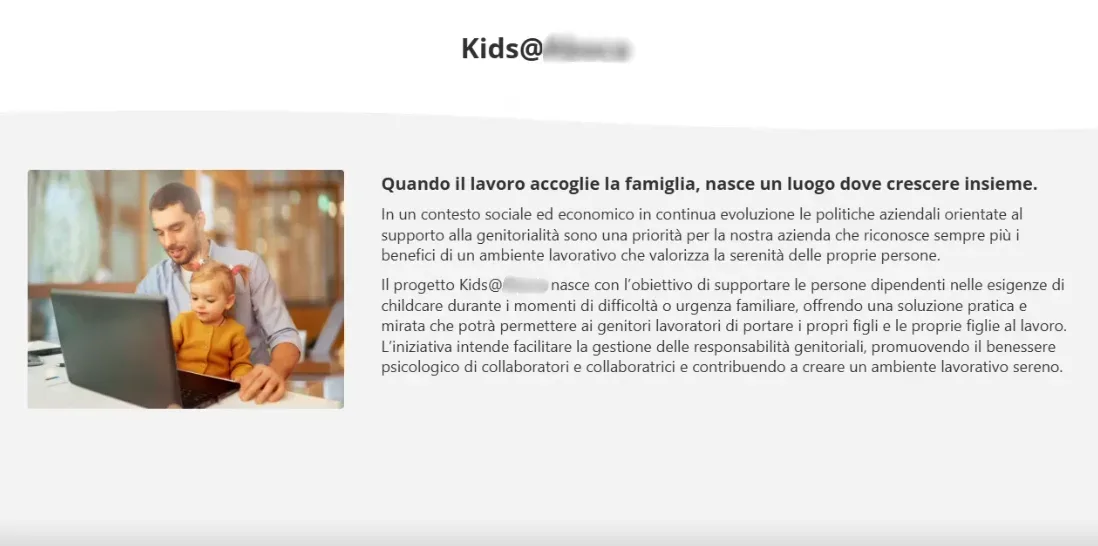
Initiatives in the SharePoint intranet
The Results: a highly active Italy, and potential to build on elsewhere
The data clearly illustrates the gap between the countries managed. Over a week, the Italian home page alone averages more than 2,000 page views from around 638 unique users, while the French site, in the same period, sees only a handful of visits.
Beyond the numbers, the most encouraging signal remains the client’s openness to experimentation.
The treasure hunt, born out of a specific need for this company, has become an asset valued across the whole company community. The supplier portal and the digitalised forms have also replaced manual processes with traceable, faster workflows, giving the client reason to continue requesting consultancy and support over the years.
Attention to users therefore stays high, kept up also through news announcing new colleagues joining the company, and those leaving, with a small dedicated space on the intranet for each of them.
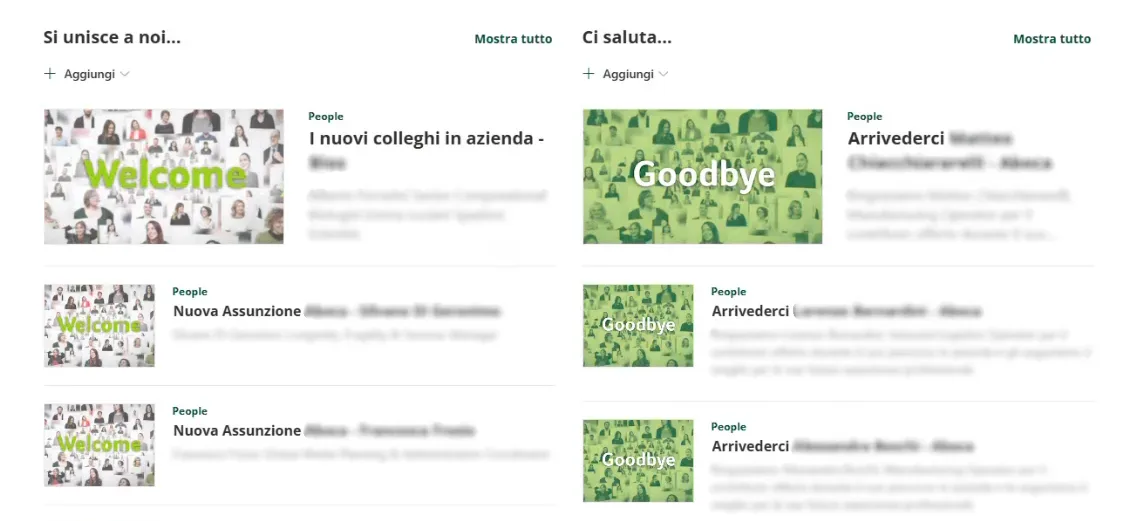
Colleague spotlight in the company intranet
What’s Next?
The most pressing issue remains a visual redesign of the Italian platform, which still bears the hallmarks of a fairly dated SharePoint aesthetic compared with what is achievable today.
Work is also planned to simplify the document structure, currently still divided by individual group company, leveraging the more modern features now available on SharePoint. The countries outside Italy remain an open chapter, with significant room for growth given a potential user base that is still only lightly engaged.
An idea built to solve one client’s specific need can, over time, become a tool that benefits many others: this project’s treasure hunt is the clearest proof of that.
Would you like to bring some play and digitalisation into your multi-country intranet? Book a demo and discover how intranet.ai can accompany you in every country where you operate.