The Problem: multiple properties, multiple identities, no shared reference point
The group manages several distinct properties, each with its own identity, its own operational tools, and in some cases different booking and HR software.
Before this project, nothing connected a staff member at one property to a colleague working at another, beyond formal administrative group membership.
The main challenge was therefore cultural before it was technical: create a shared sense of belonging, without erasing the specificities of each property, which remain distinct operational realities with their own needs.
An added layer of difficulty came from the fact that this was the very first shared digital experience for the whole organisation, with a level of technological maturity still at an early stage.
A further element of complexity concerned the make-up of the workforce. The group has around sixty permanent employees across operational and managerial roles, but the real number of people involved grows considerably during the tourist season, with seasonal staff often without a company computer — think of waiters, cooks or dining room staff.
Any tool designed only for desktop use would have excluded a significant portion of the people the project aimed to reach.
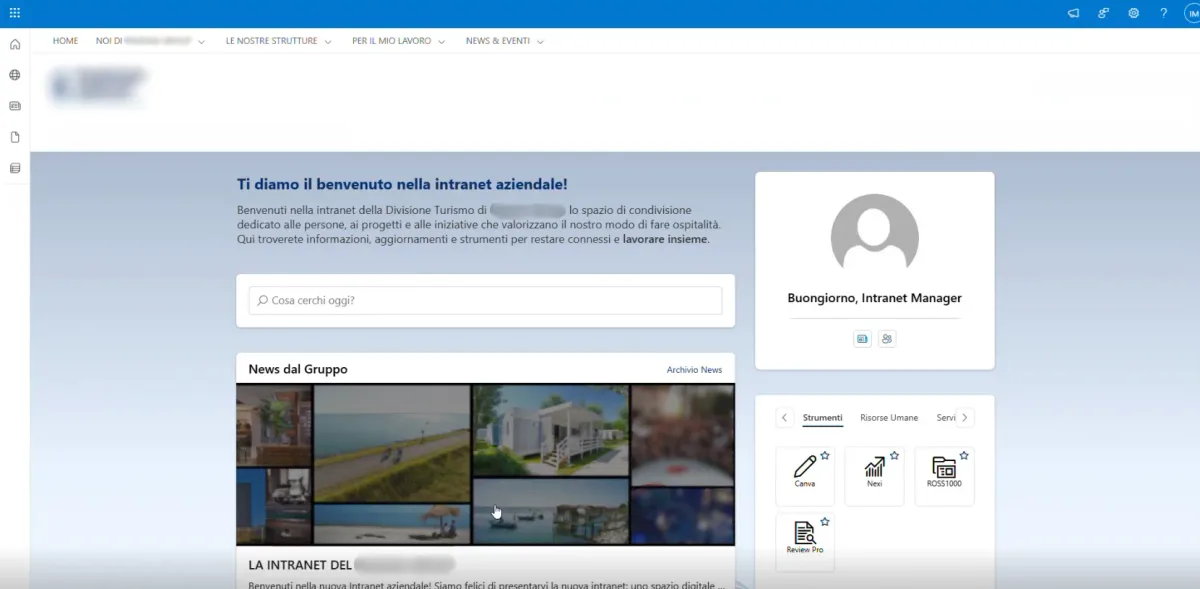
Home page of the hotel group's intranet
Our Solution: centralise without flattening identities
The answer to this need for centralisation was to build a single home page designed to host all company-wide communications, regardless of property, without creating separate vertical sites for each location.
Tools, applications and the most used external links were selected and organised into categories shared across all properties, so that anyone, regardless of their workplace, would find everything they need in one place.
To still respect the specificities of each property, dedicated property pages were created, designed as true mini home pages for each part of the group, with an introductory text, the property’s logo and useful resources automatically filtered for that specific location, including operational documentation such as front office manuals. A solution that keeps a recognisable identity for each property, while always staying within the same central platform, without having to navigate between different sites.
The same principle was applied to the more operational part of the platform as well.
Company documents were organised into three macro-categories common to all properties, such as sales procedures, guest relations management and front office activities, using metadata to let each employee filter content based on their own property, while staying within a single shared page.
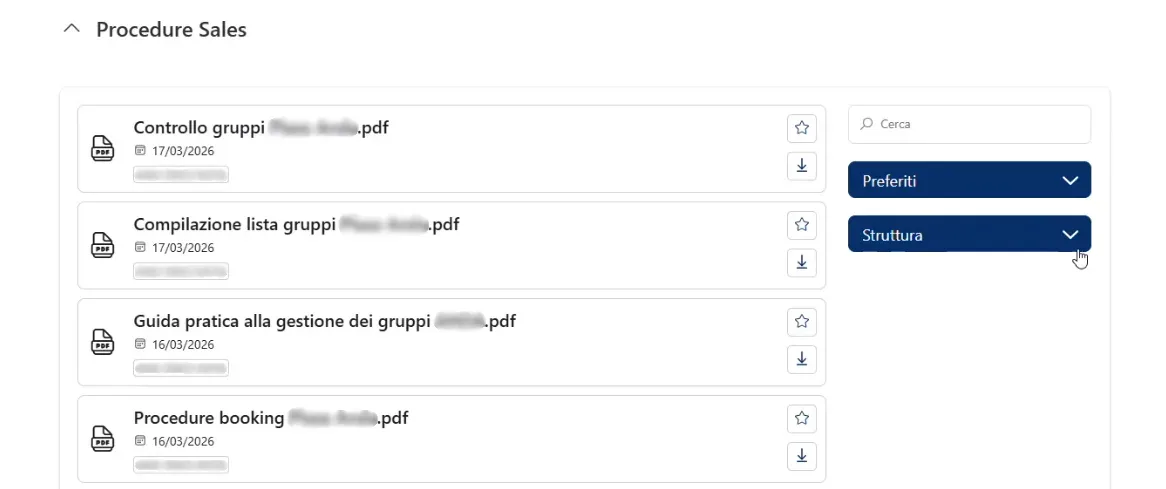
Company document management on the SharePoint intranet
Given the nature of the group and the make-up of the workforce, one of the most significant investments concerned the mobile app.
This was designed specifically to allow platform access even for seasonal staff without a company computer. A choice that meaningfully expanded the pool of people potentially reached by the tool, well beyond staff with a fixed workstation.
The choice of the other intranet components was guided by the awareness of addressing an audience with its very first experience of a tool of this kind. For this reason, fundamental structural components were favoured over more sophisticated tools.
Frequently asked questions, for example, were used to orient users on basic concepts, such as what a company directory is or what the intranet itself is for. A personalised welcome box gave first-time users an immediate sense of digital identity, while a pop-up communication tool, capable of hosting video content too, was designed to highlight important announcements such as the opening of a new season.
The Results: a solid foundation, ready to be truly lived in
The technical project was completed on schedule, with around one month of overall work, and the platform configuration, including the mobile app, was completed with all structural elements ready for immediate use across all properties in the group.
This case therefore tells the value of having built a solid foundation, scalable and matched to the real digital capabilities of an organisation taking its first steps with a tool of this kind.
Among the reasons that led the group to choose intranet.ai was the possibility of starting with a correctly sized solution for the organisation’s real needs and capabilities, without having to invest straight away in an oversized platform that would have remained underused.
An approach like this proves particularly valuable in the case of internal reorganisations too. A simpler platform to manage makes any handover between different contacts easier, an aspect not to be underestimated when assessing the scale of a first digital project.
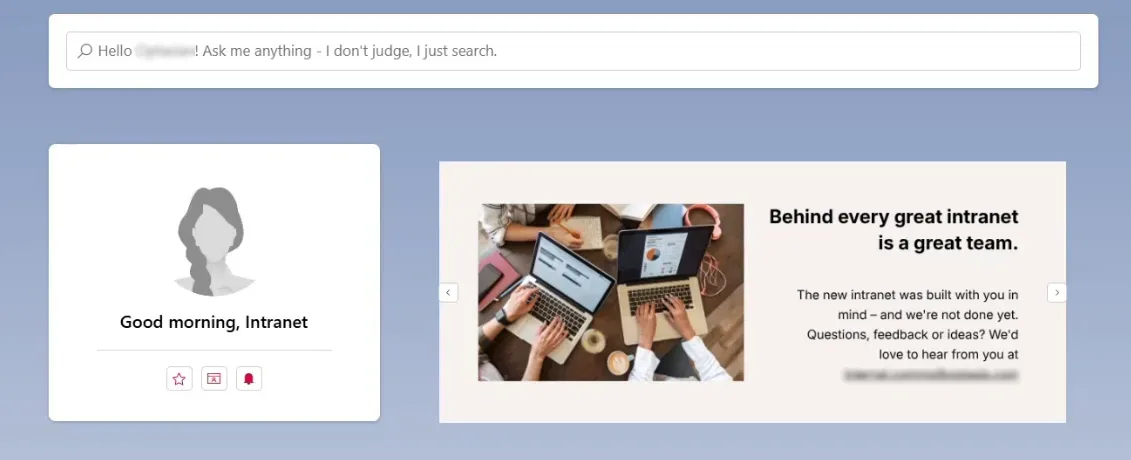
News section on the intranet.ai platform
What’s Next?
The recommendation shared with the client concerns a gradual and mindful use of artificial intelligence tools, for example to automatically generate FAQs from existing company documents, an activity that could ease and speed up the work without requiring advanced technical skills.
The option also remains open to extend the platform with more advanced engagement components, such as a digital bulletin board or gamification tools, solutions that can be easily integrated at a later stage.
Sometimes the real value of a project isn’t measured in the first month’s numbers, but in having built something that’s ready and waiting for the right moment to truly come alive.
Ready to deploy your first hotel intranet with a simple, solid foundation? Book a demo and see how intranet.ai can support you from day one.