
The Problem: Scattered Information and a Language That Changes Everything
The project started with a different setup than usual.
Much of the initial structural work was carried out in close contact with the client’s internal ICT team (Information and Communication Technology), which took direct responsibility for building the platform’s backbone, then left each department, from HR to communications, the task of populating it with text and document links.
A different way of working than usual, but made possible by the fact that the institution had solid in-house technical skills.
Since this is an international client, the decision to turn to our intranet.ai team was driven above all by the perception of a more complete service compared to the alternatives considered, a factor that often weighs more than the technological component alone when it comes to choosing a provider to build a tool as delicate as an institutional intranet.
The real difficulty of the project, however, concerns language.
The intranet was initially built in English, but at a certain point in the project the decision was made to move all content to Arabic, with everything that entails at the layout level. Arabic is read right to left, which means the entire interface has to be reversed compared to the Western logic that most digital tools, including intranet.ai’s web parts, are normally built around.
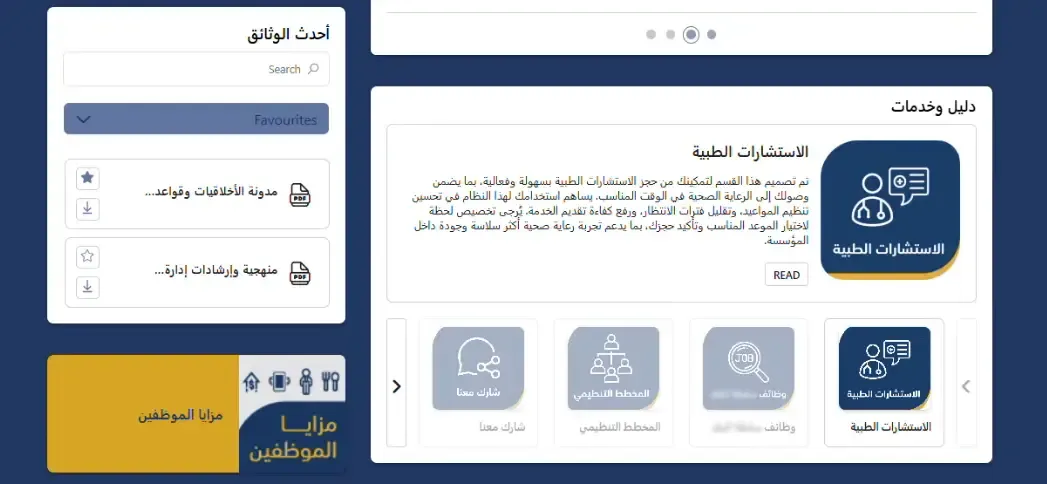
Home page of the Arabic SharePoint intranet
Our Solution: Adapting Component by Component
Setting the site language to Arabic in SharePoint was not enough to solve the problem on its own. In several cases it was necessary to intervene manually on individual components, because the web parts were not designed to natively handle reversed reading logic.
A concrete example concerns text alignment relative to document icons: without a specific intervention, the text tended to overlap with graphical elements, precisely because the component was not used to orienting itself in the direction opposite to its default.
The adaptation work therefore required a targeted intervention component by component, checking that each element of the platform behaved correctly even when read from right to left, a level of attention rarely required in a standard intranet project.
At the same time, the overall structure of the platform was designed to reflect the client’s institutional and formal nature.
Being a banking supervisory authority, the home page mainly includes a section dedicated to internal surveys, useful for gathering structured feedback from employees, together with a series of informational banners that rotate periodically, with tips and information about the Microsoft tools in use.
Together with the client, we therefore built a kind of informational engagement, rather than a true social engagement space, consistent with the institutional sobriety required by a client of this type.
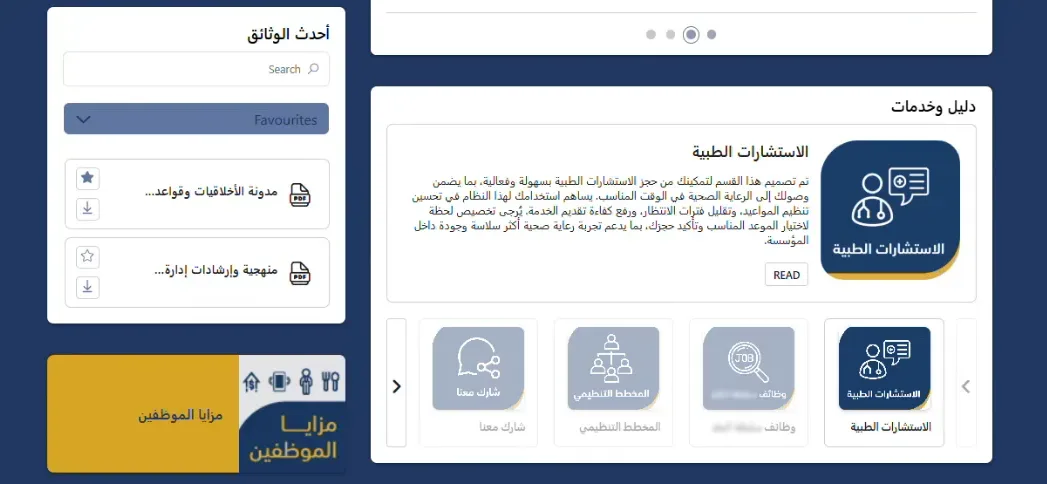
Reversed reading in intranet.ai's features
The Results: A Finally Stable Platform, Populated by Many Hands
Despite the difficulties encountered, the first usage signals tell a story of good initial adoption.
In the thirty days following launch, the platform recorded around 280 unique visitors, a considerable number given that the institution’s total workforce is itself around 280 people. From these results, it can be inferred that almost the entire company population had direct contact with the new tool in its first month of life.
One element that likely contributed to this rapid adoption was the involvement of numerous internal editors. The distributed governance structure allowed content to grow quickly thanks to the combined work of multiple teams at the same time, rather than depending on a single centralised management point.
It is worth noting that this project also represents a particular case from the point of view of the client relationship.
The choice to work closely with the internal ICT team made it possible to make the most of the solidity of sites built with intranet.ai’s components, which are well suited to being populated quickly by many different hands once the base structure is defined. A collaboration model that is very useful for clients with solid in-house technical skills, especially in institutional contexts where direct control over digital processes matters a great deal.
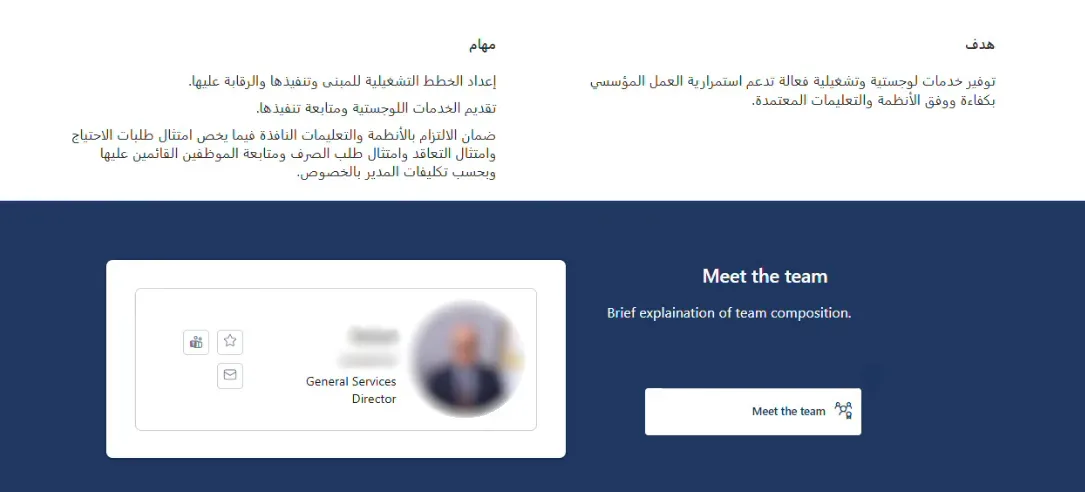
Departmental page in the company intranet
What’s Next?
From the earliest phases of the project, the client had expressed concrete interest in introducing intelligent search tools within the platform. This topic therefore remains an open subject for a later phase of the project.
In addition, with the entire company population having already come into contact with the tool in its first month of life, the next challenge will be turning this widespread first contact into a consolidated daily habit, supported by the ongoing work of the many editors distributed across the institution’s departments.
Building a platform in a language with reversed reading logic is an adaptation effort that touches every single visual component, and requires strong collaboration and attention to detail.
Need an intranet built to measure for a language or an unconventional layout? Book a demo and discover how intranet.ai can adapt to your specific needs.