Over the past few years, the concept of the company intranet has evolved significantly, shifting from a simple digital archive to a comprehensive platform that connects people, processes, and ideas.
This transformation has brought new opportunities for those organizations that have understood the value of communication and internal collaboration as key factors for achieving sustainable growth.
In this article, we’ll explore the reasons why every company should adopt an intranet and how they can maximize their investment, with expert advice on the tools to use and the initiatives to implement to engage employees.
What you will find in this article
Why companies should adopt an intranet
The first intranets were static tools, mainly designed to collect and distribute internal documentation such as policies, regulations, and operational manuals.
Their role was informative, with minimal interaction from employees.
Today, however, the company intranet has evolved into a digital ecosystem, equipped with all the necessary tools to manage communication and collaboration among colleagues with ease.
Modern intranet solutions offer:
-
Real-time communication tools, such as chats, forums, and virtual bulletin boards that facilitate information sharing and interaction, even in hybrid or distributed work environments.
-
Social features, such as user profiles, posts, and comments, to help create a more inclusive and engaging environment.
-
Integrations with third-party systems, such as CRMs, project management software, and document management platforms, which together simplify workflows without duplicating data.
-
Workflow automation for internal processes, allowing the company to reduce daily workload and minimize the risk of errors.
These and other features have helped make the intranet a reference point in corporate life, offering everyone the opportunity to work more easily and share ideas, going beyond traditional barriers that once separated teams and departments.
If adopted correctly, an intranet enables companies to achieve numerous benefits. Some are listed in the table below.
Benefits of intranet adoption
Intranet benefits Description
More effective communication The intranet facilitates the dissemination of news, updates, and stories from the company community, making this content more accessible.
Improved collaboration Features for document management, creation of workgroups, and real-time content collaboration allow for better coordination of team activities, regardless of members’ locations.
Stronger corporate culture The intranet can host areas dedicated to promoting initiatives, sharing successes, and involving all colleagues. In addition to thematic blogs and newsletters, it can include gamification experiences like prize quizzes and treasure hunts to foster active participation and share the company’s values, mission, and history.
Better internal process management The intranet enables centralization and structuring of operational processes, integrating forms, automation flows, and monitoring dashboards. From vacation requests to expense management, feedback collection to document approval, every task can be digitized and automated, reducing downtime, errors, and reliance on paper or disorganized procedures. The result? A more efficient, transparent, and scalable ecosystem.
For an intranet to reach its full potential, it is important that everyone in the company adopts it as a daily work tool.
To achieve this, the company must develop an intranet adoption plan, which outlines the strategies and initiatives to promote regular use of the platform within the organization.
Without this plan, the risk increases that the intranet will be perceived as just an accessory (and not a central part of daily routines), potentially resulting in a wasted investment.
As Microsoft itself suggests in the chart below, to facilitate intranet adoption, colleagues should be involved from the implementation phase, provided with targeted training, and shown the value of the platform through concrete examples.
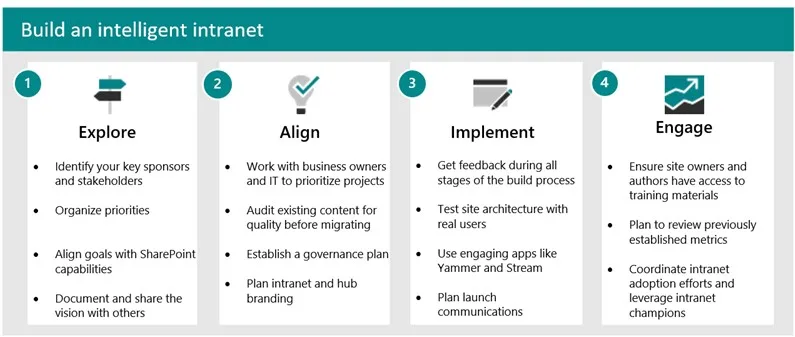
Microsoft’s plan for the proper adoption of an intranet
See intranet.ai in action
A ready-to-use intranet on SharePoint Online, live in days. Book a free demo with our team.
Book a demoStrategies for intranet adoption and launch
Every intranet should be born from a careful reflection on the goals the organization intends to pursue. This initial analysis phase allows for a detailed overview of needs, expectations, and potential critical issues that may arise during implementation.
An intranet is not just an IT product but, as we have seen, a strategic asset to improve communication, collaboration, and corporate culture.
For this reason, it’s important to identify the most relevant objectives for your organization (e.g., reducing the time spent searching for documents, encouraging knowledge sharing between teams, centralizing access to procedures) in order to guide the design process and accurately measure its outcomes.
It’s also essential to understand the target audience.
The concept of a “persona” or user profile in the Microsoft ecosystem and in the adoption of SharePoint solutions follows this logic: creating archetypes (new hires, managers, field operators) helps identify the needs of each worker category.
Depending on the tasks performed, the projects followed, and the required skills, the features and content that should be included - or even highlighted - in the intranet will vary.
Once the objectives and audience are defined, clear rules must be set for the creation, editing, and archiving of content, as well as for the management responsibilities of various sub-sites or intranet sections.
If governance is not properly set up, there is a risk of redundancies, overlaps, or outdated content that make the portal harder to use. Defining who can create new collaboration spaces, how these spaces are approved and by whom, and how frequently the content must be reviewed prevents the intranet from turning into a “no man’s land”.

We have therefore clarified the objectives, as well as the target audience of the intranet. Now, this overall vision must be translated into an action plan.
This step can be facilitated by creating a roadmap that identifies the main initiatives to be developed and the so-called “quick wins”, which are the simplest and fastest projects to implement that allow for tangible benefits in a short time.
One solution is to map the existing sites and assess their usefulness. Consulting with the owners of these sites or with the heads of different corporate teams helps determine which sections are a priority and which are no longer necessary.
At the same time, it is useful to identify any missing content in relation to the defined goals: for example, if the new intranet aims to support internal training but there is no dedicated area yet, its creation should be planned.
From this analysis, an initial editorial plan can be built that defines what to publish, how often, and who will be responsible for content management.
There may be many initial projects, so to avoid confusion (and wasting valuable resources), it is advisable to proceed step by step, starting with those that ensure the greatest return in the shortest time.
Creating a site for internal communications or a self-service HR site is often a first step in implementing the intranet, as these types of sites, due to their usefulness, immediately generate a high level of user engagement, motivating users to visit the portal daily.

This guide talks about intranet adoption, and adoption is driven by users: but who are these users?
We recently discussed defining the target audience. To do so, we must start from top management and work our way down to individual employees.
The involvement of company leaders is essential: if those who lead the organization show that they believe in the intranet (by actively participating, posting updates, and providing feedback), the rest of the staff will be more inclined to see it as an essential tool and to follow their lead in using it.
It is often through leadership messages that the importance of an initiative becomes evident.
At an intermediate level, managers can make a difference by encouraging use of the portal, using it to share department goals, define workgroups, and monitor their activities. If a manager regularly uses sections like forums or project pages to coordinate their team, it’s highly likely that team members will get used to collaborating within the intranet before turning to other platforms.
You can also identify ambassadors in different departments to spread tips and best practices. These may be people who are more interested in technology or naturally inclined toward digital collaboration, ready to answer colleagues’ questions and provide support when needed.
Their enthusiasm is often contagious and can help overcome any resistance to change that the intranet may bring.

The adoption of a company intranet is not accomplished through technical implementation alone.
Even the most modern solution remains unused if people do not see its value.
That’s why a targeted communication plan is needed, along with an appropriate training plan and initiatives that keep colleagues engaged over time.
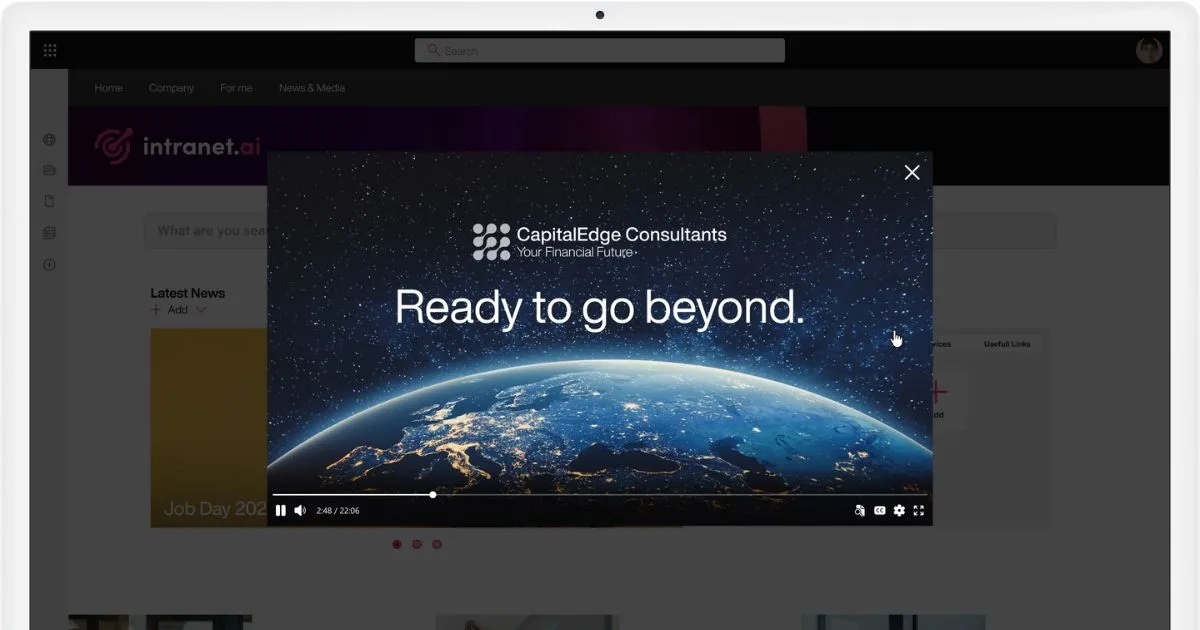
The intranet launch must go beyond formal announcements, sparking curiosity and showing how this tool can improve every employee’s work life from day one. Short introductory videos, for instance, can be embedded in the portal to demonstrate how its features simplify tasks and collaboration.
To maintain a high level of interest, a good practice is to send regular updates, such as a newsletter, with tips on how to use the available features.
A series of webinars and live streaming events is a valid alternative to help users get familiar with the new intranet and provide timely answers to colleagues’ questions.
However, initial enthusiasm may fade if the user experience is not engaging. In this regard, gamification experiences can turn learning about the intranet into a fun discovery, through challenges, goals, and rewards that encourage participation.
A treasure hunt that guides users through various sections of the portal, encouraging them to explore content and features to reach the final prize, is one of the experiences we often suggest to our clients.
As mentioned, training is just as important as communication.
For this reason, it’s advisable not to limit yourself to a single introductory session, but to structure a full onboarding journey. Ideally, users should be engaged over several weeks, with on-demand content, practical guides, and recorded webinars. To complete the training plan, you can also offer interactive workshops and hands-on sessions with the support of a tutor.
Intranet Adoption: Why choose Microsoft 365?
The adoption of a company intranet depends on the quality of the platform and on how it is integrated into the daily lives of all employees. A digital environment built with Microsoft 365 and SharePoint Online is intuitive, scalable, and capable of simplifying the entire set of processes on which an organization relies.
However, to avoid being perceived as an unnecessary addition, it is essential to adopt intranet adoption strategies that promote regular and spontaneous use of the platform.
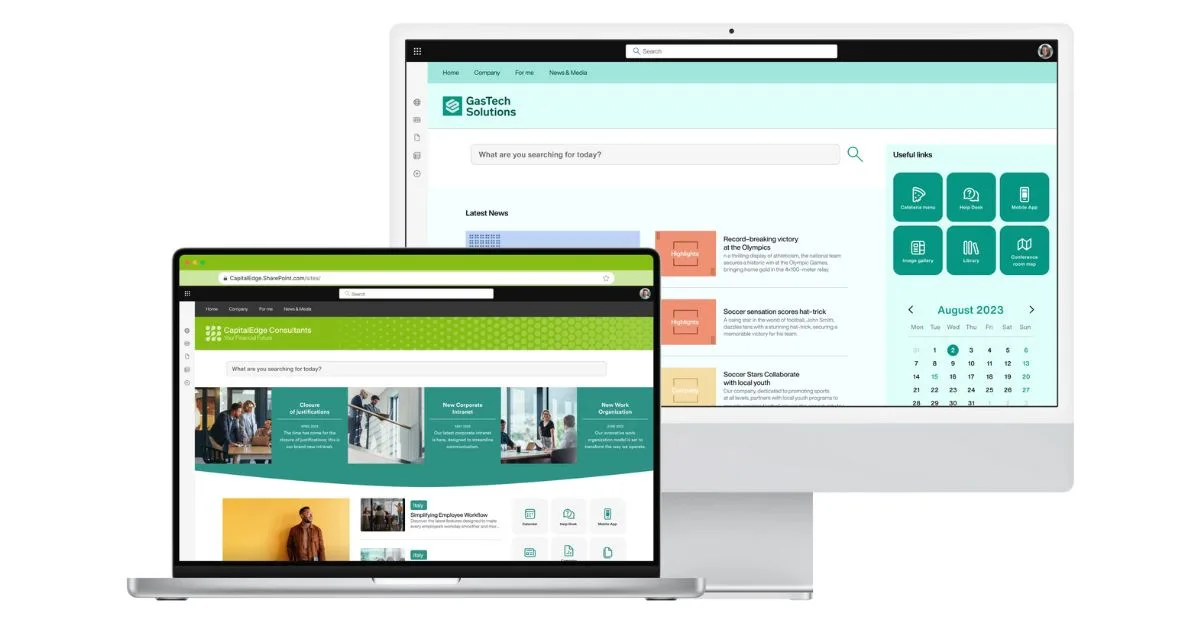
Communication sites in SharePoint come to our aid.
They are spaces specifically organized to publish updates, resources, and content, making distribution to users easier. Thanks to clear layouts and intuitive management, they allow quick access to corporate information without compromising security.
When the company requires a more complex infrastructure, hub sites allow different intranet sections to be connected, creating a coherent architecture that is easier to explore.
This is particularly useful for companies operating across multiple locations or needing dedicated spaces for individual departments.
Through this type of site, each user can access the most relevant content based on their location, department, role, and interests.
One of the most important factors for intranet adoption is its ability to interact with the software and applications already used within the company.
This is where a distinctive advantage of an intranet built with SharePoint Online comes into play: its native integration with all the technologies that make up the Microsoft ecosystem.
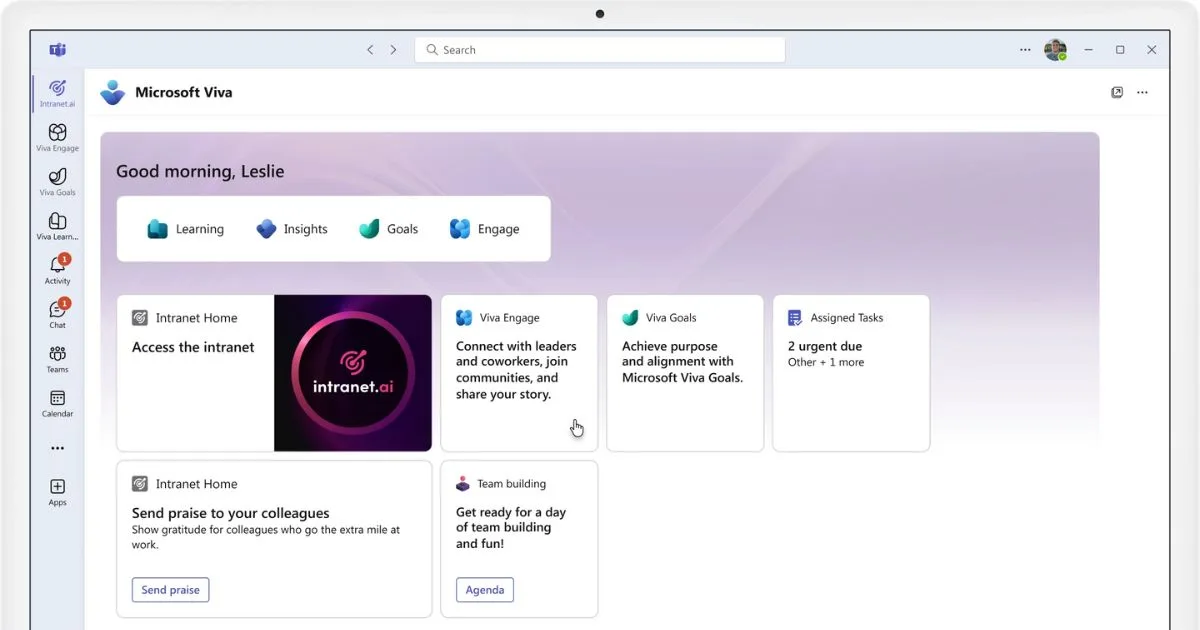
Take Microsoft Teams, for example, which integrates seamlessly with SharePoint to allow users to access shared documents, update portal pages, and manage team projects without constantly switching between applications. A well-connected intranet and Teams environment ensures a smoother workflow, with quick access to the information needed to perform daily tasks.
Viva Engage, on the other hand, brings a more social dynamic to the intranet, allowing colleagues to join internal discussions, ask questions within the company community, and share ideas to improve the workplace. This enhances both top-down communication, with dedicated spaces for management updates, and bottom-up communication, giving everyone the opportunity to voice their opinions.
Planner and Stream are two other applications that enrich the intranet experience. The former helps manage shared tasks and projects, while the latter hosts video content supporting training and corporate culture.
By bringing all these applications and features together in a single environment, the intranet naturally becomes the operational hub of the company’s digital workplace. Users will be inclined to visit it daily not because they have to, but because it provides everything they need to communicate, collaborate, manage, and stay informed.
One obstacle to consider, which could slow down the intranet adoption process, is the difficulty in finding information caused by poor content organization or limited integration between different company applications.
We’ve seen how a SharePoint Online-based intranet poses no issues in terms of integration. Even with third-party software, connectors or simple development tasks are available to centralize data within the portal while ensuring easy access.
Let’s now look at how the SharePoint intranet performs when it comes to content management, starting with the most delicate type of content: documents. In fact, one of SharePoint’s main strengths lies in being an excellent document management system, addressing the problem at its root with features such as:
-
Shared libraries, where documents are stored and made accessible to users with the correct permissions, avoiding version duplication and data loss.
-
Version history, which allows you to see who updated a file and when, always keeping track of each change and enabling restoration of any previous version.
-
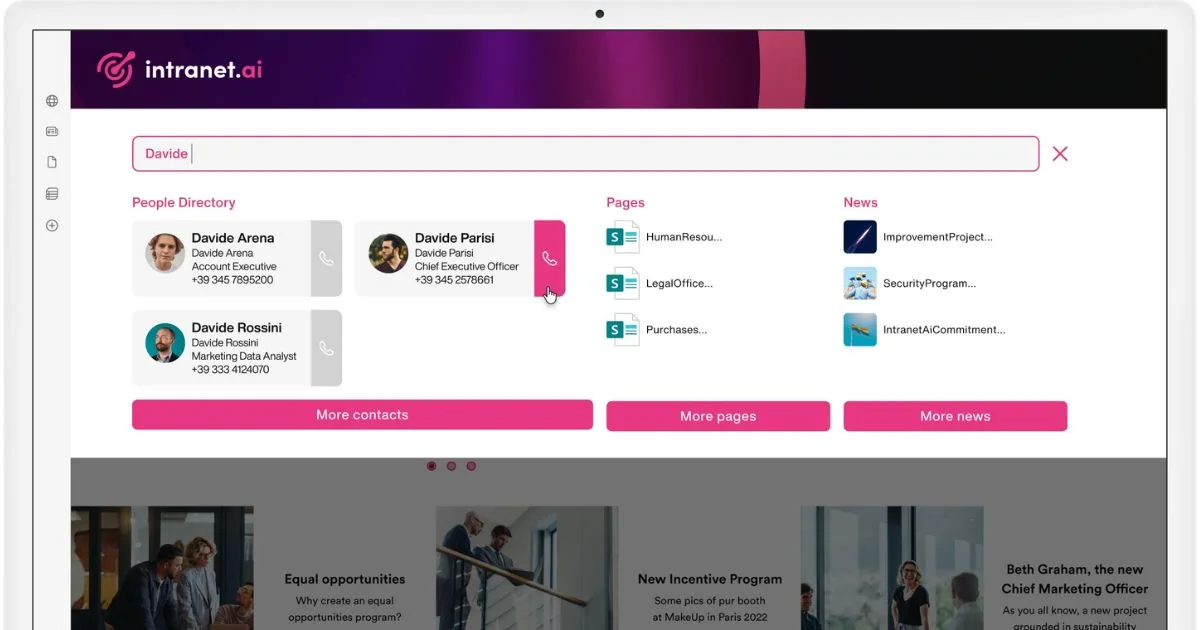
Advanced search, enhanced by our team, capable of leveraging tags and metadata to quickly retrieve the most relevant documents based on the terms users enter.
In addition, the ability to publish updates and news directly on the intranet homepage ensures that colleagues are always informed, wherever they are, and never miss any important information.
Finally, let’s talk about customization.
How many companies struggle not only with content management but also with making the digital workplace a reflection of their own identity? Answer: many (virtually all of them).
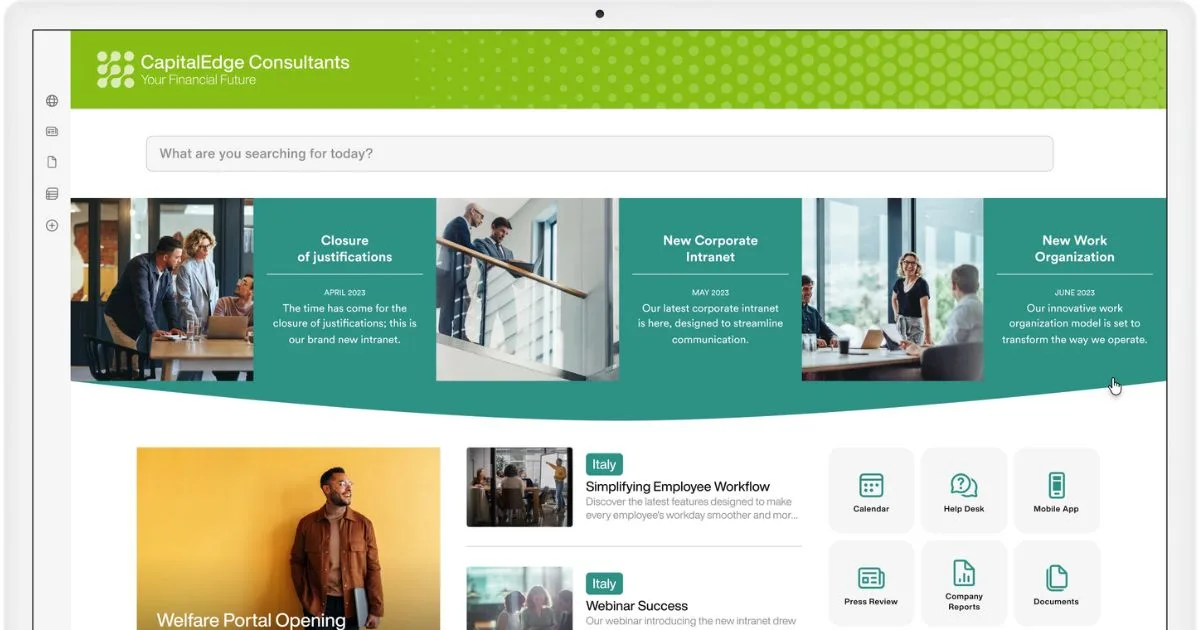
But even in this case, the Microsoft 365 and SharePoint intranet comes to the rescue, starting with the extensive catalog of ready-to-use templates available in the look book.
The SharePoint look book is in fact a collection of predefined layouts and designs that concretely show how an intranet might look and how communication sites, thematic hubs, and pages dedicated to specific business scenarios can be structured.
Companies therefore have access to a repository of ideas for customizing the information architecture and design of their intranet, relying on templates that can be directly downloaded or used as a reference to organize content, insert sections and web parts into various pages, and apply the most suitable themes to enhance the brand.
In addition to the look book, we highlight that with the intranet.ai solution, companies can count on:
-
Support from our experts to configure the portal, from the architecture and features to provide, to implementing integrations and custom graphics.
-
A portfolio of modern, ready-to-use themes that can be applied and customized independently.
Intranet Adoption: How can we help your company?
As previously mentioned, in building a coherent and functional architecture, solutions like intranet.ai complement the experience offered by tools like the look book.
However, intranet.ai offers much more.
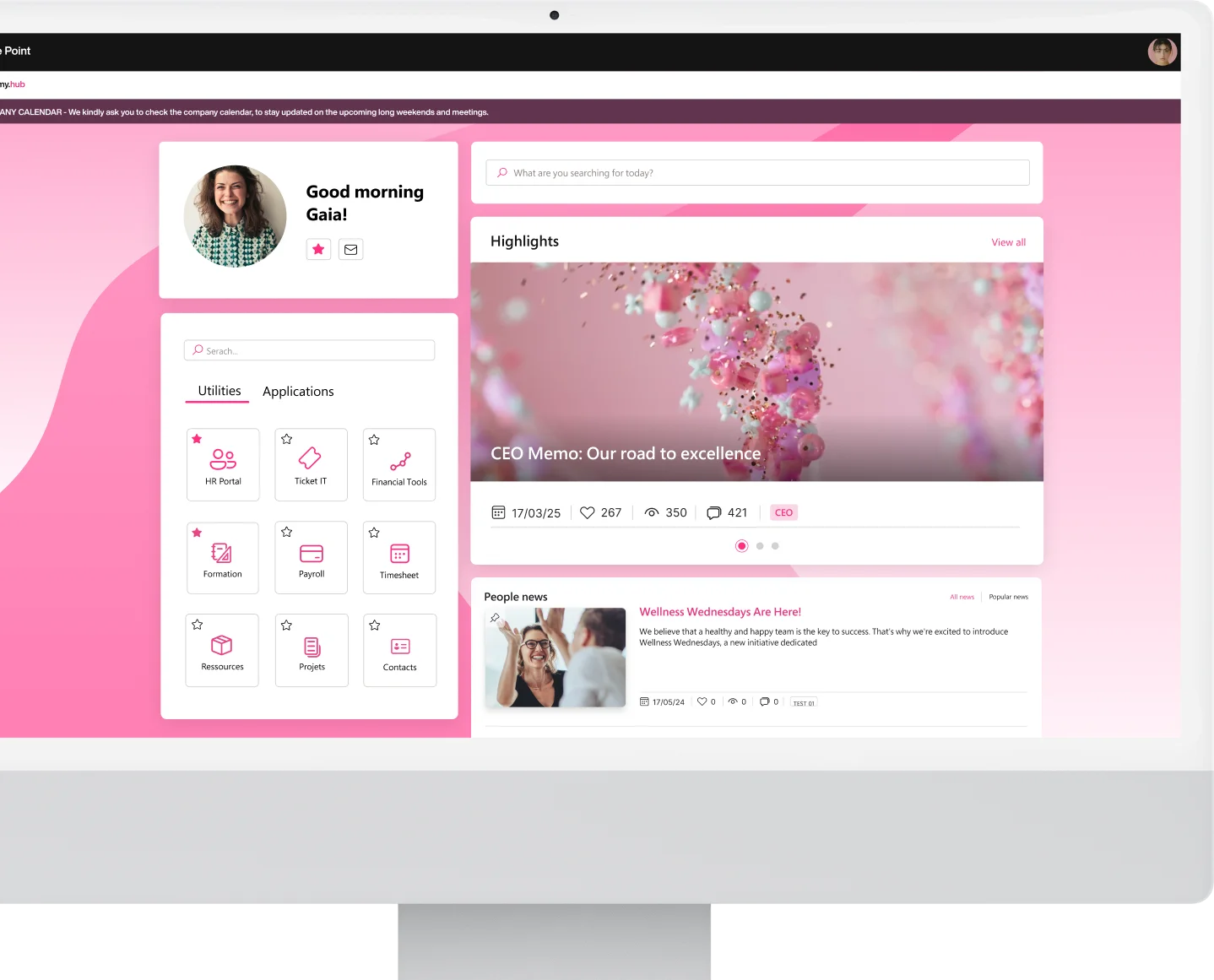
Our solution includes a complete intranet, already configured in terms of architecture, features, pages, and layouts so it can be used within just a few days for launch.
It also includes consulting services and ongoing support from our experts in SharePoint, Microsoft 365, and internal communication (with a focus on user experience and engagement), to ensure every new feature is used correctly.
This is an integrated method that combines graphic design with content planning and process digitalization, with the goal of increasing productivity and well-being in the company through intranet adoption.
The idea behind intranet.ai is to provide a set of ready-to-use components and features that accelerate the implementation of the digital workplace.
By leveraging SharePoint’s capabilities as a technological foundation, the product offers a modern and easily customizable layout, pages and sections dedicated to news, announcements, documents, and procedures, as well as tools for collaboration and social interaction (comments, reactions, user profiles), all integrated within a single ecosystem.
Implementing a new intranet portal requires the involvement of multiple roles and a clear understanding of actual business priorities. During the pre-launch phase, which is crucial for achieving a good adoption rate, the intranet.ai team:
-
Supports IT administrators and project managers in the initial SharePoint configuration, setting permissions and defining the structure of sites and sub-sites.
-
Assists with branding decisions, working on graphic elements, colors, and logos to highlight the company’s identity in every detail.
-
Provides consulting to identify key content to be published and to build a governance framework capable of ensuring the regular update of procedures, policies, and guidelines.
The goal is to present end users with a coherent and well-organized portal from day one, encouraging spontaneous adoption and curiosity toward the new digital workplace’s features.
The ability of intranet.ai to adapt to the many and diverse needs of each company is reflected in the range of services designed to handle data and app migration.
In more detail, our team can migrate content from legacy intranet systems or shared file repositories, reorganizing them into structured libraries and updating metadata and permissions.
It can also implement custom automations by leveraging integration with Power Automate.
Lastly, it can incorporate the software already in use - even if external to the Microsoft ecosystem - into the new digital workplace, creating a single point of access for all corporate information.
All these actions help the intranet be recognized and adopted as the central hub: the nerve center of the company’s digital transformation, connecting people, information, and processes for better productivity and employee experience.
Obviously, we’re talking about intranet adoption here, and it can’t stop at the launch.
To ensure large-scale adoption, intranet.ai offers clients and partners a package of communication and internal marketing initiatives aimed at generating engagement and keeping users informed about the features of their intranet.
Once go-live is reached, the mission becomes to keep users engaged, which requires regular analysis and course corrections, especially in more complex organizations.
In this regard, the offering includes:
-
Engagement measurement tools (page views, average time spent, social interactions, etc.) and regular reporting, to identify areas for improvement.
-
Ongoing update plans, in which new features or integrations are assessed for implementation based on internal company feedback.
-
Continuous support to improve governance and promote internal training campaigns, ensuring the intranet always stays aligned with the organization’s goals.
In this sense, intranet.ai is not only a provider of an innovative technological solution, but also a long-term partner, ready to support companies in the evolution of their digital workplace.