The Problem: an intranet built by accumulation, not by design
The starting point was an existing intranet, developed over time with basic SharePoint features and custom-built components. A working tool, but one that had grown without any real overall design.
The navigation menu, analysed in detail during the project, turned out to be made up of items added one by one over time, each time the need arose to host a new piece of content or a new section, with no structural logic to guide future choices.
This approach had generated a series of recurring issues.
Navigation was organised more around departments than around user needs. A whole menu item dedicated to human resources existed, for example, but anyone consulting it had no indication of what they would actually find inside. Document pages followed a hybrid classification, partly based on document type and partly on business function, creating confusion about where to look for specific content. The search bar, one of the most used tools on any intranet, only worked if the user already knew the exact title of the document they were looking for, returning few useful results for generic keyword searches.
Another telling signal came from an analysis of users’ most frequent searches.
One of the most searched-for pieces of information was the company org chart, buried in a document page dedicated to human resources, among thousands of other documents available in that same section. Content that should be immediately visible had, over time, turned into content that was almost hidden.
The overall picture, later confirmed by the focus groups, described an intranet consulted only for specific needs, not perceived as a genuine day-to-day work tool. None of the employees interviewed, during the in-depth sessions, described the intranet as their central point of reference for everyday work.
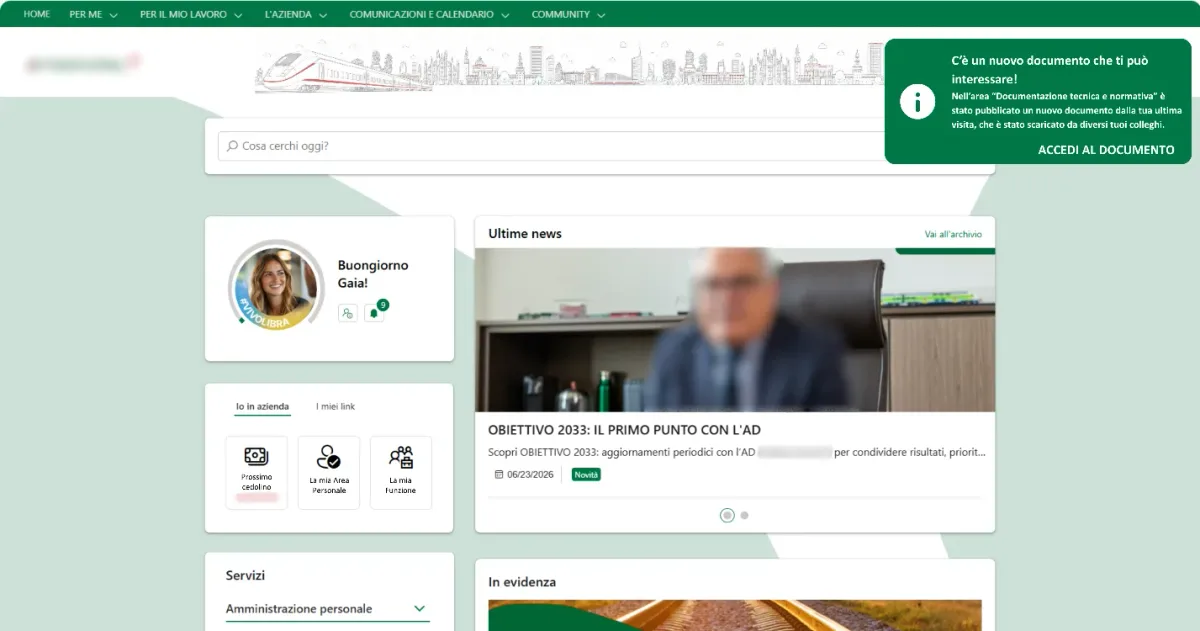
Home page of a railway transport company's intranet
Our Solution: a structured method before any design decision
The proposal shared with the client was to split the work into two macro phases: first an in-depth analysis of the existing situation, then, based on what emerged, defining the path to follow for the actual redesign project. A choice driven by the intention to let the business, and not only the intuitions of the internal communications team, guide decisions on the new tool.
The analysis phase was structured across multiple levels, carried out in parallel.
On one hand, there was technical mapping work. The existing navigation was analysed in detail, as was a full year of data collected from the analytics tool already in use, to understand which pages were visited most, which news items were actually read, and which activities users carried out most frequently. On the other hand, the team started a direct listening effort, beginning with a survey addressed to the entire workforce that stayed open for a month, and continuing with five focus groups, organised in the following weeks, each lasting an hour, with up to seven or eight participants each time selected from different departments, age groups, and seniority levels, to ensure as representative a sample as possible.
Each focus group followed a three-part structure. It always started with gathering concrete, recent examples of intranet use, a way to break the ice and anchor the discussion in real episodes rather than generic impressions. It then moved on to a guided discussion on the three priority improvement areas that had emerged from the survey, namely the document area, the personal area, and information search. The session always closed with a more open moment, dedicated to expectations for the new intranet, in which participants could share ideas and suggestions while imagining the ideal tool they’d like to have in their hands.
All the evidence gathered, from the technical analysis as well as the survey and focus groups, fed into a synthesis work that led to the creation of mockups for the home page and five main pages chosen together with the client.
A new navigation menu was also proposed, designed according to a logic exactly opposite to the one found in the previous version. Organised around scalable macro-topics, it was designed so that adding any future content would always have a natural place already planned for it, without needing to reinvent the structure each time.
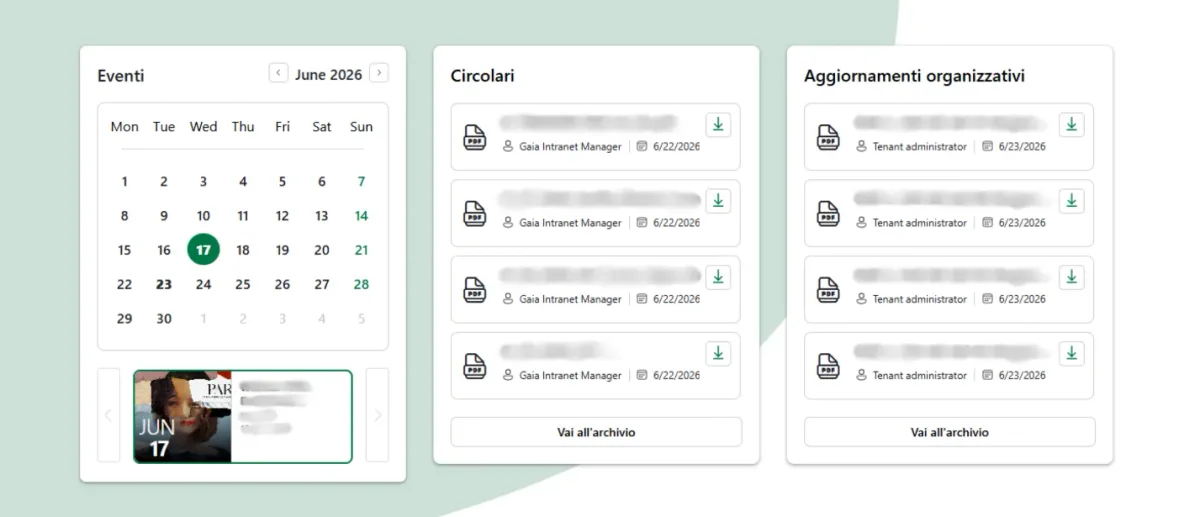
Useful news in the SharePoint intranet
The Results: a solid foundation for informed decisions
The most immediate value of this work is measured in the quality of the information gathered, which made it possible to turn a redesign project into a path guided by concrete evidence rather than impressions.
The analysis precisely confirmed the issues our team had already hypothesised during the first exploration of the existing platform, namely unintuitive navigation, a document area organised inconsistently, a poorly effective search function, and a significant share of outdated content among the top results shown to users, a sign of an editorial governance issue to be addressed alongside the technical redesign.
Direct conversations with employees also surfaced concrete requests that a purely technical analysis would have struggled to identify.
There emerged the need to bring together into a single portal information currently scattered across multiple different channels, and alongside this the desire for smarter search tools, capable of interpreting the natural language of questions rather than requiring exact keywords. More than one employee pictured out loud a chatbot able to guide users through content, while a widespread request concerned personalisation: people would like a dedicated space for favourite and saved content, built around their own role rather than being the same for everyone.
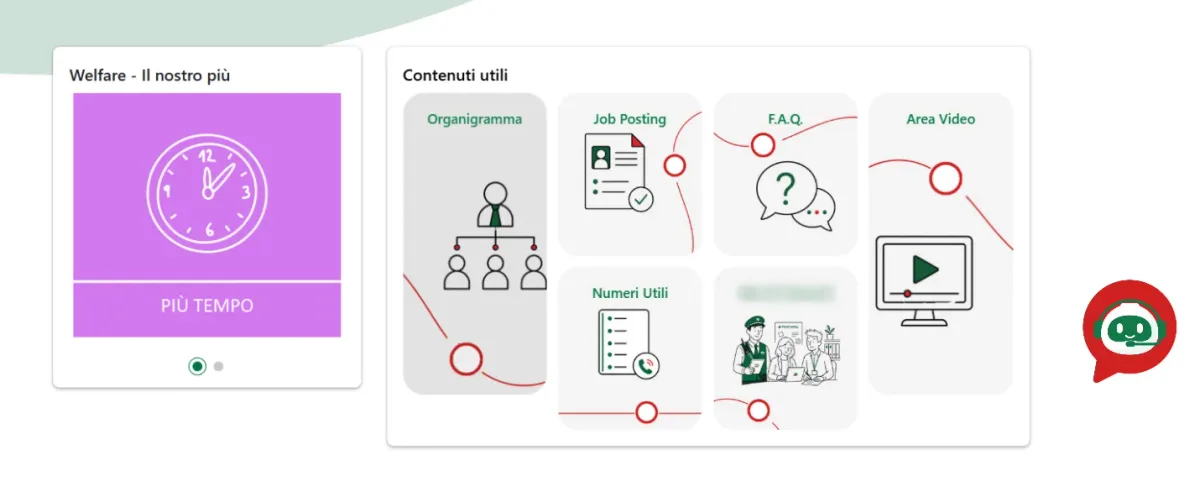
Chatbot and intelligent search in intranet.ai's corporate intranet
What’s Next?
Among the topics the project will address in a later phase are the digitalisation of processes still tied to paper forms, the revision of the document structure around topics rather than departments, and the introduction of user experience personalisation tools, along with the evaluation of intelligent search and chatbot tools, repeatedly requested during the focus groups.
An in-depth analysis, carried out before redesigning a single page, makes it possible to build a new intranet around the real needs of the people who will use it every day.
Are you considering redesigning your intranet and want to start from a solid analysis, before any design decision? Book a demo and find out how intranet.ai can support you throughout this journey.