Who is the I ntranet Manager, and what do they do? This role is increasingly sought after in companies that have adopted the intranet as the operational center of the digital workplace. The Intranet Manager is, in fact, the person responsible for managing the portal, including its content and services.
They are not limited to technical management, but lead the communication strategy and coordination between departments. By optimizing the user experience and integrating new technologies the company has chosen to invest in, they are able to improve both the adoption rate of the intranet and its long-term effectiveness.
In this article, we will delve into the profile of the Intranet Manager and explore how companies can support (or even replace) this role through targeted consulting services and features such as Gaia by intranet.ai.
What you will find in this article
Intranet Manager: who they are and what they do
The Intranet Manager is the person who oversees the internal digital ecosystem of an organization, with the responsibility of transforming the intranet into a strategic hub for communication, collaboration, and productivity.
In most cases, when we think of someone managing a site, we picture an IT operator handling pages and permissions.
In reality, the role of the Intranet Manager is much more complex and multifaceted, as it requires skills in project management, user experience, internal communication, and increasingly, knowledge of artificial intelligence and the principles of the digital workplace.
We can compare this role to that of a director who has to complete a film. In the corporate world, in fact, it’s the person who coordinates resources, departments, and goals so that the intranet becomes a daily work tool capable of supporting the growth and competitiveness of the entire organization.
However, this role goes beyond mere technical management of the platform.
While it is essential that they deeply understand how the adopted tools work (for example, SharePoint Online and the rest of the Microsoft 365 suite), their job is to translate the company’s strategic needs into features and content that have a real impact on employees’ daily work.
To achieve this, they must have in-depth knowledge of internal processes, departmental priorities, and above all, how people within the company use the technology at their disposal. Only then can the intranet become a space where each user can quickly find what they need.
From this introduction, it’s clear that an Intranet Manager handles a rather broad range of activities, which we can summarize into five main categories.
Let’s take a look at them in the following table.
Intranet Manager: What skills do they need?
Skills of an Intranet Manager Description
Strategic planning and governance
-
Defines long-term goals for the intranet, aligned with the company’s vision and objectives.
-
Develops a roadmap, evaluating costs, priorities, and required resources.
-
Establishes KPIs to monitor performance and identify areas for improvement.
Content and knowledge management
-
Oversees logical organization of information, using taxonomy and tagging to simplify user searches.
-
Coordinates departments to ensure published content is always up to date.
-
Promotes best practices for creating documents, pages, and media to enrich the intranet.
User Experience and accessibility
-
Optimizes navigation with IT team support.
-
Implements advanced search tools, often using semantic or artificial intelligence, to deliver accurate results.
-
Ensures the platform is compatible and easy to use on mobile devices.
Adoption and change management
-
Organizes training sessions and workshops so employees can incorporate the intranet into their daily work.
-
Provides user support and encourages idea sharing on how to use or improve the portal.
-
Collaborates with HR and Internal Communication teams to promote engagement initiatives to strengthen corporate culture.
Security management
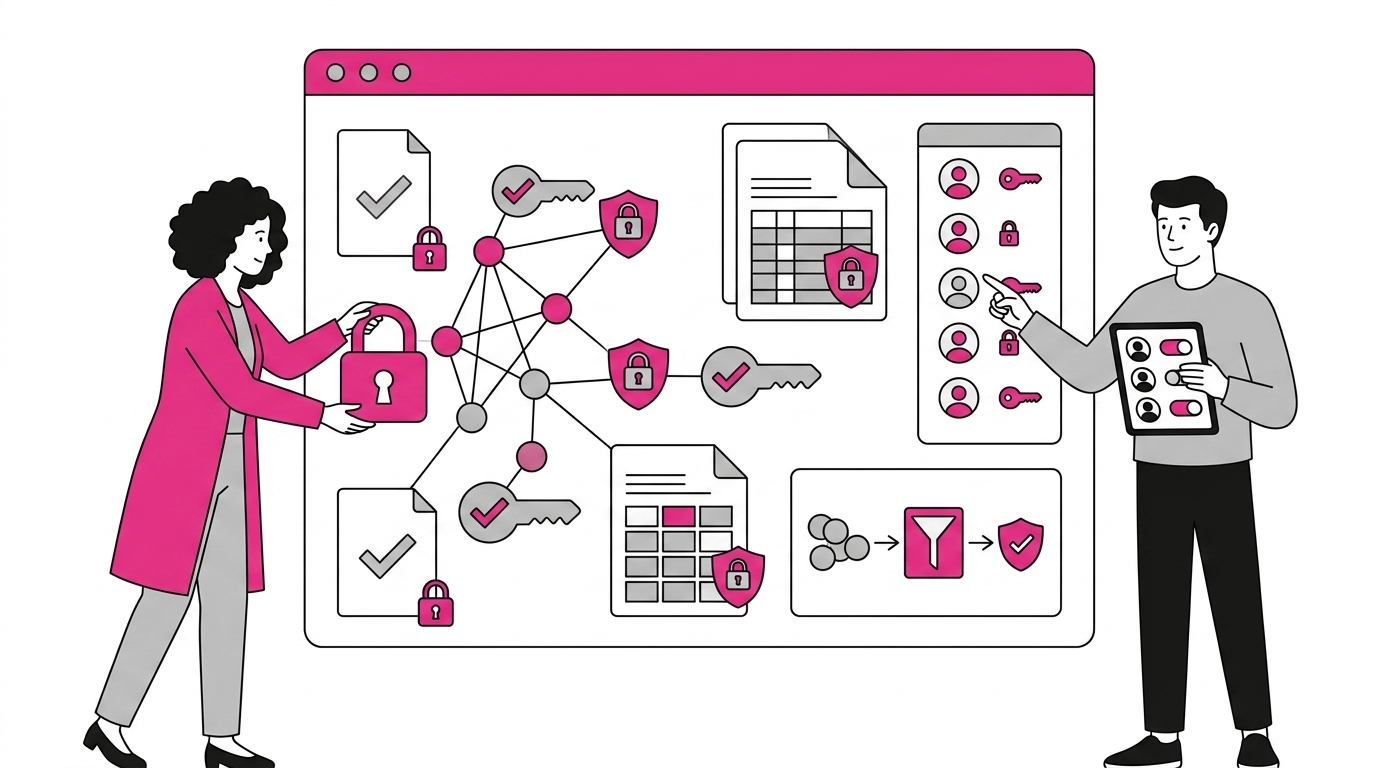
- Defines access policies and assigns appropriate permissions to each user, working with the IT team to ensure intranet privacy and data protection.
An Intranet Manager is, in essence, a leader.
They are responsible for guiding the company toward effective intranet usage, establishing it as a “shared space of everyday usefulness” rather than just a repository of links and documents.
They must also coordinate key figures (executives, department leads) and make important decisions, such as prioritizing new feature development, evaluating the introduction of new technologies, or setting the necessary budget to optimize the corporate infrastructure.
Yet despite the significant workload this role entails, it’s not uncommon for Intranet Managers to also find themselves editing content pages, uploading documents, doing basic coding, or managing site styling.
Many companies don’t realize that assigning these tasks to the Intranet Manager takes valuable time away from planning and monitoring the overall digital transformation project.
An intranet manager should not personally handle operational or technical tasks, which should instead be delegated to more specific roles. They shouldn’t be the ones publishing new initiative pages or updating archived content.
These are all tasks with their own clear and defined owners.
This brings us to a key point: the Intranet Manager is not a jack-of-all-trades. Every workday has its limits, and the role of the person we’ve earlier called the “director” is precisely to coordinate the people involved in the intranet project and ensure everything runs smoothly.
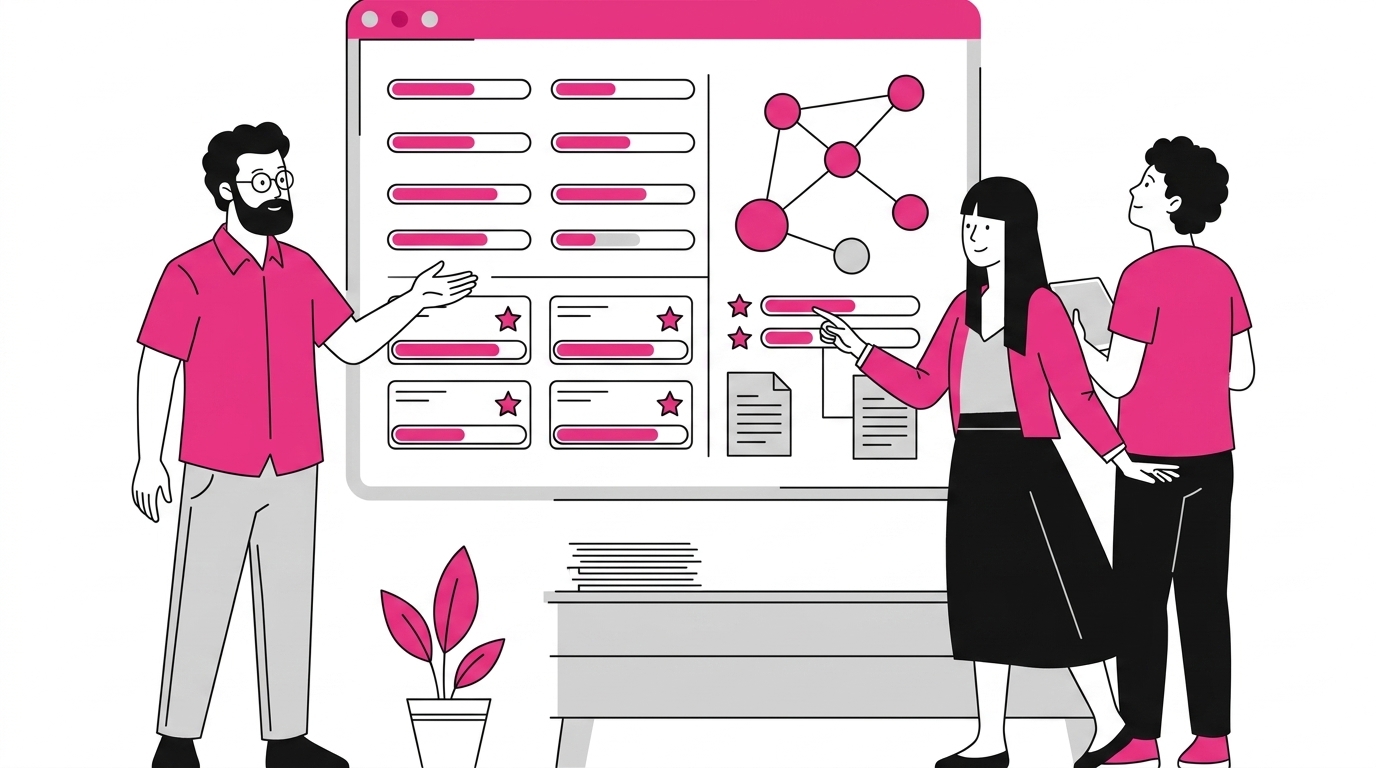
Our experience shows that to get the most out of an intranet, it’s best to create a dedicated team, consisting of a technical lead, web publishers, creatives of various kinds (from copywriters to graphic designers), and at the top, an Intranet Manager free to focus on coordination.
Their “ideal agenda” should include activities such as:
-
developing new intranet use cases;
-
aligning with management to create valuable content;
-
analyzing adoption data to identify improvement areas;
-
constantly updating themselves on new digital workplace technologies.
In today’s companies, shaped by hybrid work and innovations like AI, the role of the Intranet Manager has expanded significantly, focusing on keeping the digital workplace (and the entire organization) up to date.
They must look beyond the company website and envision how the portal can best support everyone’s work. An example might be integrating chatbots to answer FAQs or employee engagement platforms to stimulate active participation in internal discussions. For these reasons, almost every company aiming for effective digitalization needs a full-time Intranet Manager.
If the responsibilities of this role are limited to just a few hours per week or randomly distributed among several people, the intranet and integrated digital workplace risk quickly losing their value and becoming obsolete.
Needless to say, the company’s investment would then be completely wasted.
See intranet.ai in action
A ready-to-use intranet on SharePoint Online, live in days. Book a free demo with our team.
Book a demoIntranet Management: What does consulting offer?
Companies that wish to entrust the handling of their intranet to an Intranet Manager can benefit from our consulting service, which focuses on designing a tailored intranet, creating training and promotional content to engage employees during the launch of the new portal, and monitoring performance to continuously improve the digital workplace built together.
The goal is to support each company by providing decades of experience in digital workplace creation and Microsoft technology adoption.
Support begins with the installation of our solution, properly customized, and then extends to all post-launch activities (content publication, employee engagement, feature expansion, to name a few). Thanks to a ready-to-use solution and a proven method, our team is able to ensure successful adoption, avoiding unnecessary development costs and long waiting times.
When we talk about consulting, we mean a 360° journey that starts with analyzing business needs and extends to user training and the creation of communication campaigns aimed at launching and enhancing the new intranet.
In the initial phase, we focus on listening to priorities to map operational workflows and content sharing practices between departments, allowing us to suggest the most suitable configuration: a ready-to-use solution, yes, but not a standardized one.
With over 80 vertical features developed by our team to digitize all business processes and engage employees, customization is an integral part of our approach to digital workplace creation and consulting.
Thanks to intranet.ai, it is possible to implement a company intranet based on SharePoint Online and fully customized in just 24 hours. This timeline, which might seem inconceivable, is made possible by a turnkey solution.
In practice, our solution is designed to be operational right away, without the need to start expensive custom development projects. Naturally, if further changes or integrations are desired, there is always ongoing support available with specific services for design.
In addition to the design and implementation of the intranet, our consulting service also includes the creation of a launch plan. Our team then organizes meetings with management and department heads to define which areas of the platform should be activated first, which processes require immediate attention, and which content should be published initially.
At the same time, communication campaigns are defined to inform employees about the arrival of the new intranet, how to use it to support their work, and the services they will find inside it.
This is a step that is often underestimated, or even avoided, but it actually plays a crucial role in ensuring successful portal adoption.
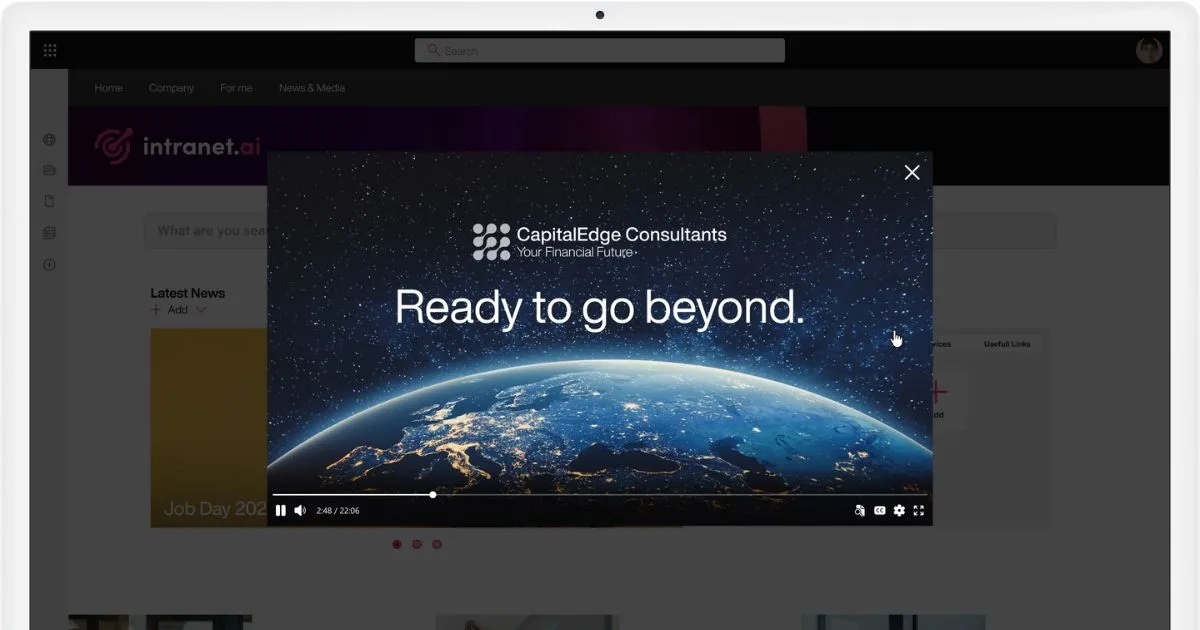
With a continued focus on adoption, our offering includes access to original training content, curated by communication professionals, that explains step by step how to:
-
use the intranet’s features;
-
manage document sharing;
-
book company resources;
-
consult the knowledge base;
-
keep colleagues engaged;
-
etc.
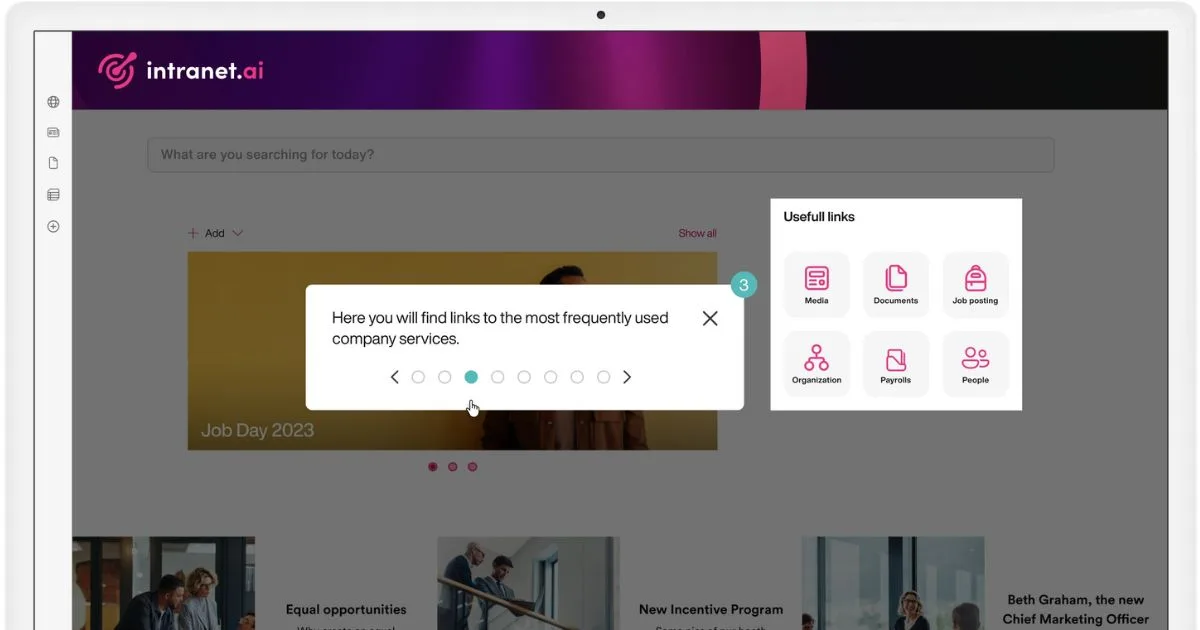
intranet.ai’s tour to discover the features of your intranet
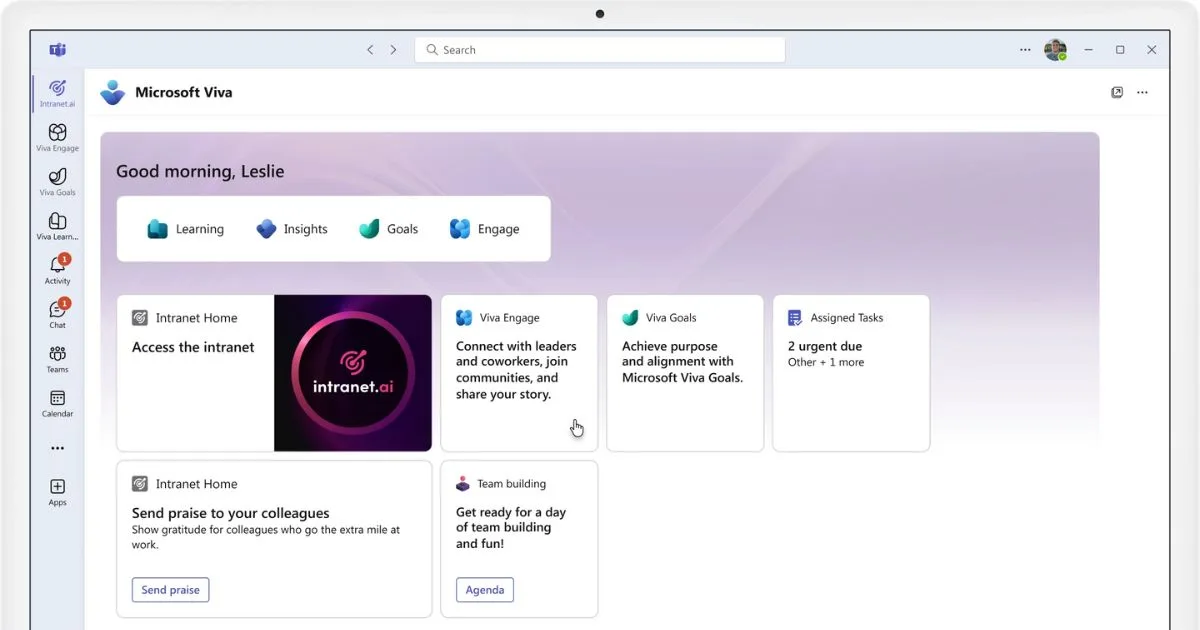
Another value we offer is the integration with the Microsoft 365 suite.
Many companies already own Microsoft licenses to use tools like Teams, SharePoint, and the Viva modules, but most of them struggle to fully exploit their potential.
As a Microsoft Gold Partner with a portfolio of over 300 projects, our team of consultants can connect the company intranet to Microsoft solutions to build a cohesive ecosystem, where every piece of information finds its place and every process can be automated.
With the help of Power Automate, for example, we can set up document approval flows, automatic notifications in Microsoft Teams for news published on the intranet, or even generate instant reports to monitor the performance of various departments.
The same goes for Power Apps, which makes it possible to quickly develop tailor-made applications for the organization without relying on specialized developers.
However, our consulting also extends to change management.
In fact, introducing a new internal communication tool or digitizing long-established processes can generate resistance, especially from colleagues who are not familiar with technology.
Our team supports the company in overcoming these challenges through the involvement of HR managers, the creation of support materials, the execution of tests on small user groups to evaluate the intranet’s effectiveness, and the analysis of feedback and suggestions.
We do not leave the company after go-live but accompany it through every stage of the intranet’s lifecycle.
This approach was recognized by Software Advice with the award for best customer support in 2024, acknowledging our commitment to responding quickly and effectively to our clients’ needs.
It’s also important to highlight that our consulting service, as well as our intranet solution, are part of an offering that is constantly evolving. We continuously develop new features to improve internal communication, document management, training, and employee engagement.
The consulting we offer aims to create a digital environment where each user feels comfortable, has a good command of the available technology, and perceives the intranet as an ally, not a burden.
Ultimately, the consulting service offered by intranet.ai is a complete and personalized journey for any company looking to invest in a modern SharePoint intranet, integrated with Microsoft 365 and aligned with its digital transformation goals.
From the first contact to the consolidation of adoption, we are committed to ensuring that every intranet project doesn’t remain just on paper, but results in tangible outcomes in terms of productivity and well-being in the company.
Gaia, your virtual Intranet Manager
Successfully adopting an advanced technology like the intranet is no easy task.
As we’ve seen, a clear strategy, structured skills, and above all, tools that can adapt to users’ real needs are required.
More and more companies are looking for solutions to optimize intranet and integrated digital workplace management, whether by hiring a full-time Intranet Manager or relying on an external consulting team.
But what if there were a third option?
With the rise of artificial intelligence, assistants capable of performing any task have emerged.
From this perspective, the recent development of Gaia redefines the very concept of “intranet management”, bringing generative AI capabilities to the heart of every organizational process.
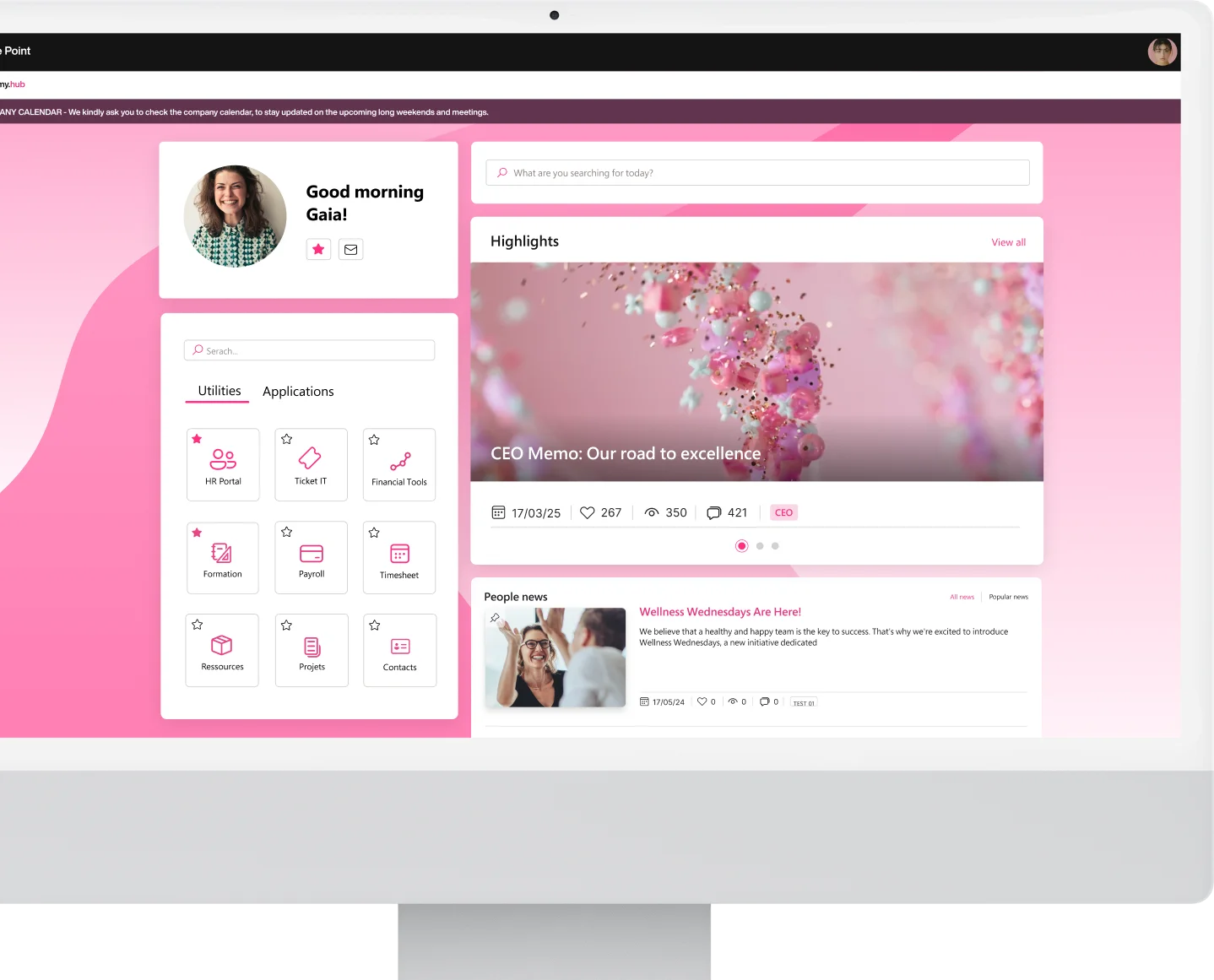
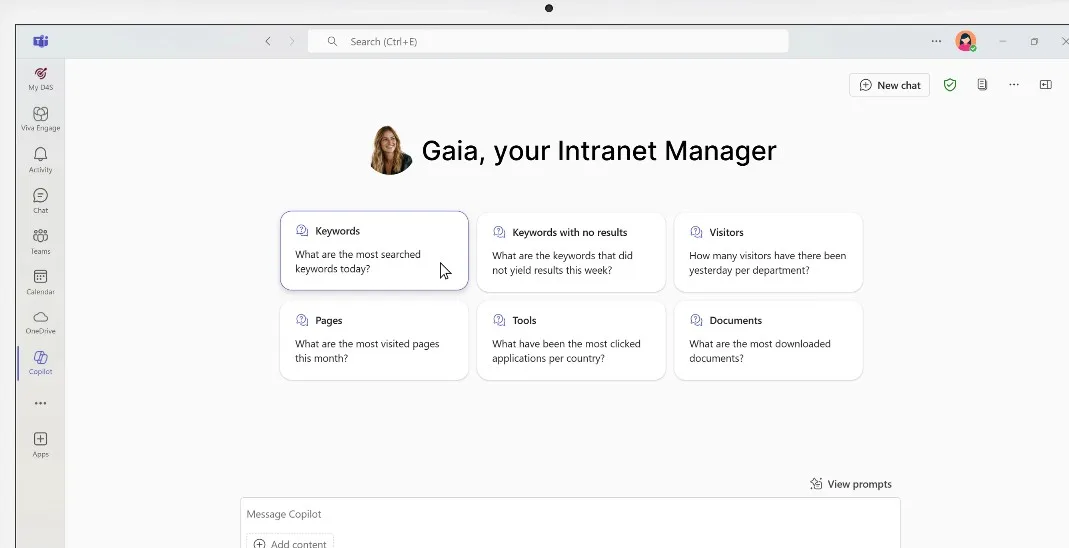
Gaia is the virtual assistant designed and trained by our team to integrate with SharePoint Online and support key corporate roles (namely the Intranet Manager, HR, and Internal Communication teams) in monitoring the performance of the digital workplace, identifying areas for improvement, and obtaining complete strategic plans (based on the best practices developed by our experts over years of consulting) to keep the intranet growing.
There’s nothing more frustrating than navigating through a sea of poorly organized content, wasting hours searching for a document or a colleague’s contact. Thanks to an AI engine trained by intranet.ai, Gaia can semantically interpret user questions, proactively suggesting files, pages, or resources that match the queries.
In this way, even a new hire or a colleague who has never used the intranet can easily navigate the company’s digital ecosystem.
No less important is Gaia’s ability to collect and analyze usage data from the platform, providing valuable insights on how colleagues interact with the intranet:
-
Which content is accessed most frequently?
-
Which keywords generate unsuccessful searches?
-
Which departments need more structured support?
Our assistant answers these questions (and many more) with targeted reports and suggestions, enabling the Intranet Manager and their team to implement more effective internal communication strategies.
Additionally, the ability to categorize and segment data helps better understand the needs of various departments, encouraging greater personalization of content and the overall User Experience.
Another key strength is the conversational interface designed to simplify interaction with Gaia.
It might seem like a minor detail, but thanks to natural language understanding, Gaia can translate chat commands into concrete actions. If a user writes: “I want to update the onboarding files for the Marketing team”, Gaia retrieves the existing resources and suggests how to improve them (both in terms of content and organization within the intranet) to make them easier for colleagues to use.

Since the artificial intelligence behind Gaia has been trained specifically for intranet management, the results are visible right from the start.
The assistant “understands” the company context, grasps the organizational structure, and above all, learns every day how to support each company in improving its digital workplace. The more users interact with the platform, the more the AI refines its understanding of each user’s needs, delivering increasingly relevant suggestions.
In this way, Gaia quickly becomes a “virtual colleague” that grows alongside the company.
Finally, the feature that makes Gaia truly unique is its flexibility of adoption.
It can be configured to manage different processes, from document approval flows to update notifications, all the way to more advanced analytics features.
Each company can shape Gaia based on its priorities, avoiding complex and costly implementations. Moreover, our team is always available to provide all the necessary support to adapt the AI to your digital workplace, ensuring a smooth transition, proper adoption, and consequently, a tangible ROI in a short time.
This is why Gaia is ultimately a revolution in the intranet world: it offers an intelligent system that can support (and in some cases replace) the role of an Intranet Manager, making intranet adoption a simpler, more cost-effective, and more personalized process.